
Top 10 Lessons from Inside Self Storage Conference
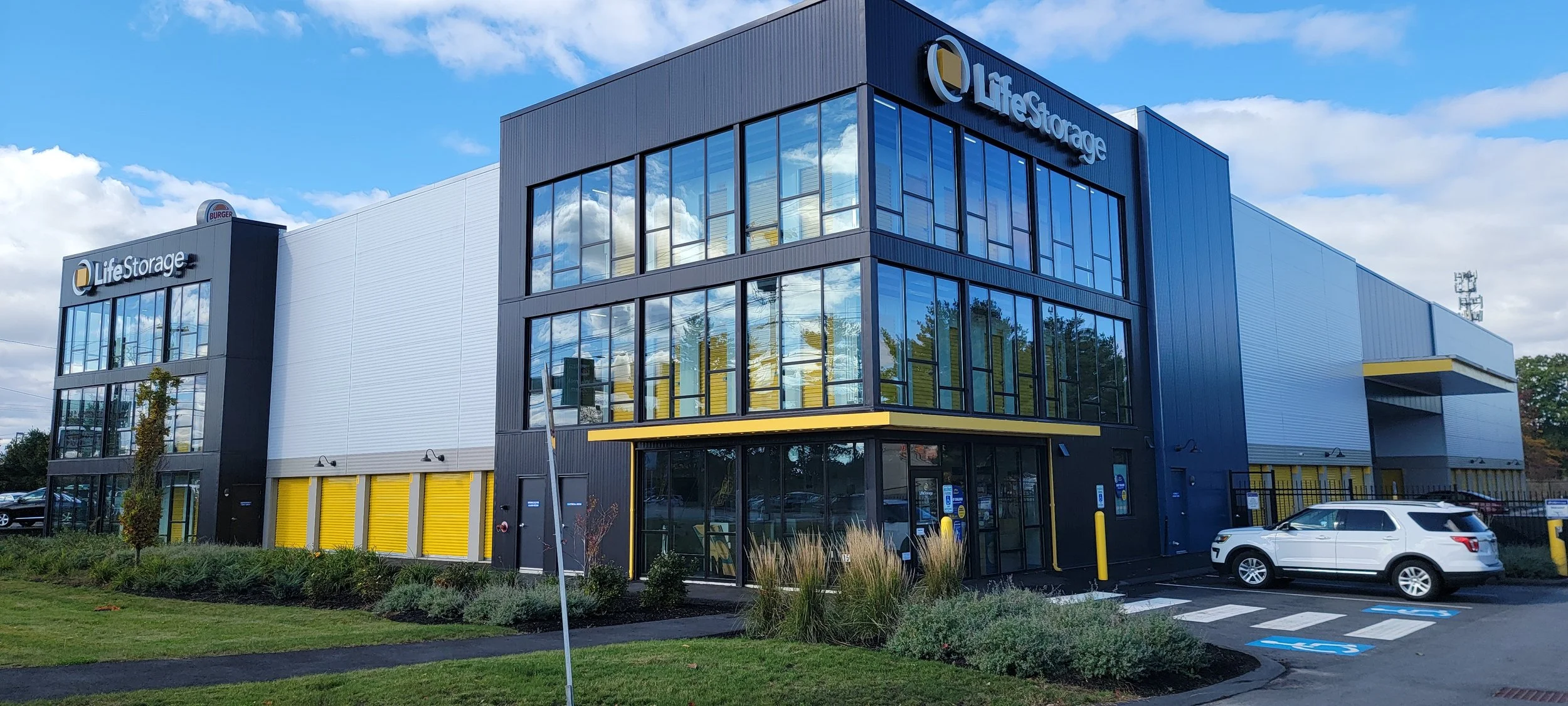
di’velept has been a self-storage architect for a decade. We’ve learned a lot during this time, but one thing we know is that there is always more to learn. Recently Jarod and Tyler attended the Inside Self Storage World Expo conference in Las Vegas. They came home with an entire list of new ideas and practices to help our clients have successful projects. If self-storage is an industry that you are interested in, these may also be helpful for you as well. Here are our top ten things to make sure you have a successful self storage project.
1 - Know your target market.
While it is easy to assume that all self storage users are young, male renters, that is far from the truth. Even though Boomers only make up about 20% of the US population they actually account for 44% of storage renters. Millennials (another 20% of the population) account for around 30% or storage users. 51% of storage users are female. This demographic data was pretty surprising to us. Also, while these numbers are true as a national average, they may not be true for your catchment area.
There are potential design differences for how a self storage facility would be designed for different populations. If your particular ideal client is younger than the national average, then a smaller than average unit mix might be the best idea. Even if your catchment demographic is very different from the national average, taking necessary steps to ensure that your site would be safe for an unaccompanied woman will only increase the safety of all of your renters, and improve your renters’ overall experience.
2 - There is no single cost to build self storage
Asking the cost of a building is kind of like asking “how much does a car cost”. You need more information to give any sort of answer. We talked with a number of contractors located all over the United States. Generally, build costs are lower in the southeast than other parts of the nation. Here is a list of prices that we heard.
Non climate - $50-$90 (very location and site dependant)
Climate $60-$110
Fire sprinkler systems will add $2-$3
Canopy boat and RV - $45-$55 (remember really wide drive aisles)
Enclose boat and RV - $55-$65 (even wider drive aisles)
The story climate controlled - $100-150.
We have seen this go all the way up to $200 in Hawaii.
Podium levels - $140-$160
This is great if you are looking to add an extra story or two.
3 - Small design changes can save you big dollars
Having an architect that is experienced with self storage, like di’velept, and knows all the tricks is the best start. But here are a few of the things that we were reminded of in the classes.

Standing seam metal roofing (cheapest and most common storage roof) has a maximum length of 80’ This means that you need to have a roof step at this distance on larger buildings.
We often slope the floor of storage to reduce grading costs. That said, selecting the right door is important to making sure those doors operate long term with this added stress.
The kick plates on corrugated walls can collect dust at the corrugation recesses. We have found that holding that kick plate up an inch or two allows the trash and dust to fall through while still being low enough to protect the wall from cart traffic.
Use bollards liberally. Bollards are the cheapest insurance against moving truck drivers you can buy. Think through your site plan and protect your buildings wherever you think it is necessary.
Signs on your units are one of the ways you can set the interior of your facility apart. It doesn’t take much and a little bit of color can really liven up your hallways.
It might seem like a fussy architect thing, but planning out the concrete control joints so that you don’t have a joint running the length of your hallway helps with aesthetics, but also the control joints tend to get damaged and need extra attention if they are in the main traffic pattern.
4 - Zoning Code can make a project die quickly.
One of Jarod’s favorite classes was given by a land use attorney. The main thesis of the class was that we, as an industry, aren’t pursuing zoning exceptions enough. Sure you aren’t going to get what you are looking for every time, but your project will likely out-position the competition because it is harder to get storage in that location. One story the attorney gave was after a storage facility was denied an exception the developer came back with a proposal on the same parcel that was a decidedly more objectionable use, but it was allowed in the zoning. The city quickly changed their mind on the storage exception.
Sometimes it is good to remind officials that normal city residents coming to store their belongings isn’t the worst thing that can happen on a site.
When you begin the zoning research there are a few things you should be aware of. Lots of places call self storage by another name. Mini-warehouse or Mini-storage are some of the most common.
Understanding the (many) little tricks that can be in the zoning code is the difference between a great project and no project at all. If you don’t feel like going through the brain damage, then hire the right team to help you out with this. At di’velept we do a bunch of zoning code research and site test fits.
5 - The building code is always updating; know how that affects your project
A lot of states are starting to have the IBC 2021 as the applicable code. There are a number of significant provisions that relate directly to self storage. In some cases we have been able to use parts of the new code even if it hasn’t been adopted yet.
The allowable building height for the way multi-floor self storage is built has increased to 4 stories. This means you can possibly have a four story building at roughly the same cost per square foot that you used to build a three story building. Great news if you are trying to fit a new building on a tight site.
We now have clarification of when fire sprinklers are required on single level buildings. If the unit has a door directly to the outside you don’t need to have fire sprinklers. If the door doesn’t open to the exterior, fire areas are limited to 2,500 square feet unless the building is sprinklered. We are telling all of our clients to plan on fire sprinklers on any conditioned single level storage.
It is not clarified that the code official has the authority to allow greater spacing of the restrooms.
6 - Boat & RV Storage sounds great, but…
At di’velept we have started a lot of projects where having boat and RV storage was one of the goals. In the end almost none of them keep it. The unit is really big and the rent per square foot isn’t very high. In addition the drive aisle widths required to ensure that these behemoths can navigate your site eat up a lot of land. If your land price makes it so this still makes sense for you, here are a few pointers.
RV and boat storage should not have more than one 15 amp power source, or people will live there.
Angled drive through bays don’t make for as efficient of a site plan, but they make navigating the site way easier.
The doors for these units need to be 12’ wide and 14’ tall.
7 - What is climate controlled storage anyway
We don’t have any idea how strictly this is followed, but best practice is if you are advertising the facility as climate controlled the temperature range should be between 55 and 85 degrees and the humidity lower than in the 55% range. The dehumidification is something that often gets missed in the mechanical systems. It is super important. At the lower winter temperatures storage facilities operate at, condensation is very common unless you are controlling humidity. Nobody wants to get the call that some precious family heirloom or photos have been ruined by building condensation. If on your climate controlled building you also have an exterior unit, making sure your architect is paying attention to where the heated and cooled area is is super important. Storage doors can come insulated, or you can install dry system fire sprinklers in those outside facing units.
8 - People panic once they are trapped.
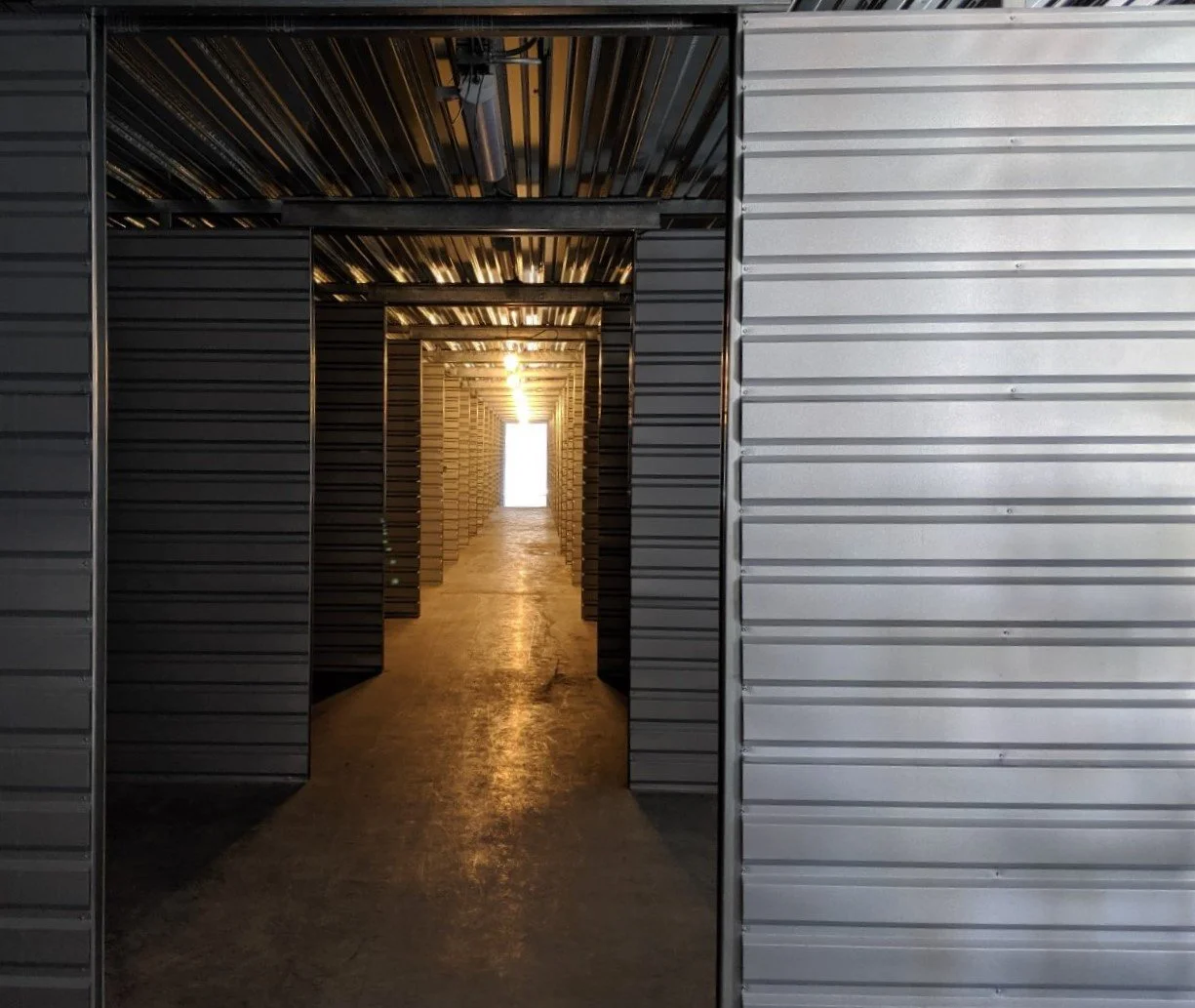
It probably sounds dumb to think this could be in a top ten list, but it is crazy what people do when they are panicked. One of the stories at the show was of a person who was in their unit late - late enough that the facility “closed” for the night. Once she got back to the sliding door it was no longer operating because it had been shut off for the night. Apparently her cell phone was dead and immediately fear set in. Instead of walking around the facility to find the other door that had to have been there, (or pushing on the glass door until it gave away as it is designed to do) she laid down on the floor and waited until morning. Such a rough night. We have also heard of stories where a lift gate hasn’t operated as expected and rather than calling someone, folks just ran through the gate with their car.
Some small design changes can help calm the nerves and save headaches both for you tenant and you. Consider adding some of the following.
Visible hard-line emergency phone.
Double Keypads (one inside and one outside the gate) and a man door in case one of the keypads stop working. While it makes sense that someone could exit and use the keypad outside to open a gate, in a panic, people don’t always think clearly.
Good signage pointing to exits that are usable after closing.
9 - Get creative to Maximize your ROI (Return on Investment)
We are always looking at storage facilities around the nation and beyond to find ideas that can help our client get the most out of their facilities. While some (or maybe none) or these are right for you it is always good to be looking.
Rentable mailboxes - if you already have a manager onsite this can be a great way to get a little value out of the rental office.
A small conference room - Lots of small businesses use self storage for document retention or inventory management. Having a small conference room onsite can help keep them renting or get them in the door.
We are also seeing specialty item storage, anything from wine (specific climate control is paramount), to valuables (with masonry walls and reinforced doors), to gun safes. There are tons of niches that might be right for your area.
10 - Hire an Experienced Team
Obviously as an architect we are going to say this, but we really did hear this from multiple owners and contractors at the conference. “Hiring an architect with experience is the most important money you can spend.” Ultimately, as compared to project cost, self storage architects just aren’t that expensive. Those of us who have had years of experience know how to create designs that are efficient to build and make use of as many square feet of the site as possible. Every time we see the proforma value of a project increase because we were able to find a few more rentable square feet it is a win.
In addition to an architect, we would also say making sure you have a contractor with storage experience is vitally important. Self storage is just built differently and one major mistake can cost you more in time than you might be saving to go with the slightly scarily low bid. Additionally as you are getting bids from contractors, make them use a universal bid form. If you don’t already have one, your architect should be able to help you put one together for your project. These are important to make sure you are comparing apples to apples bids. One little exclusion slipping through can easily be the difference in two bids, but you will be paying for that exclusion later.
If you have made it this far congratulations. This turned into a little bit of a marathon. But we came back from the Inside Self Storage conference with so much good stuff that we had to share. If you are thinking about starting a storage project of your own we hope this list was helpful. We would love to be able to help make your project successful so please reach out.