
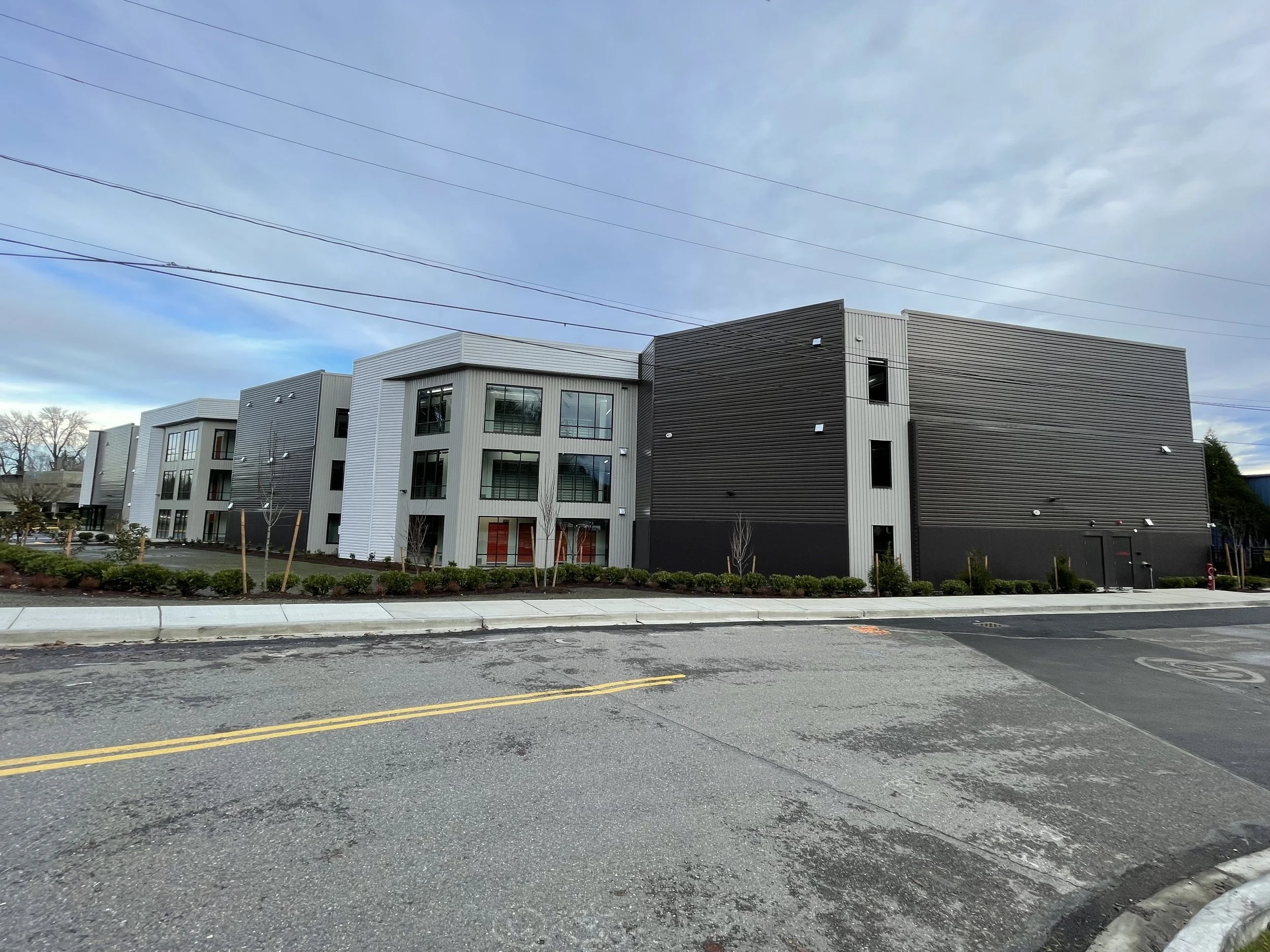
Tukwila Storage
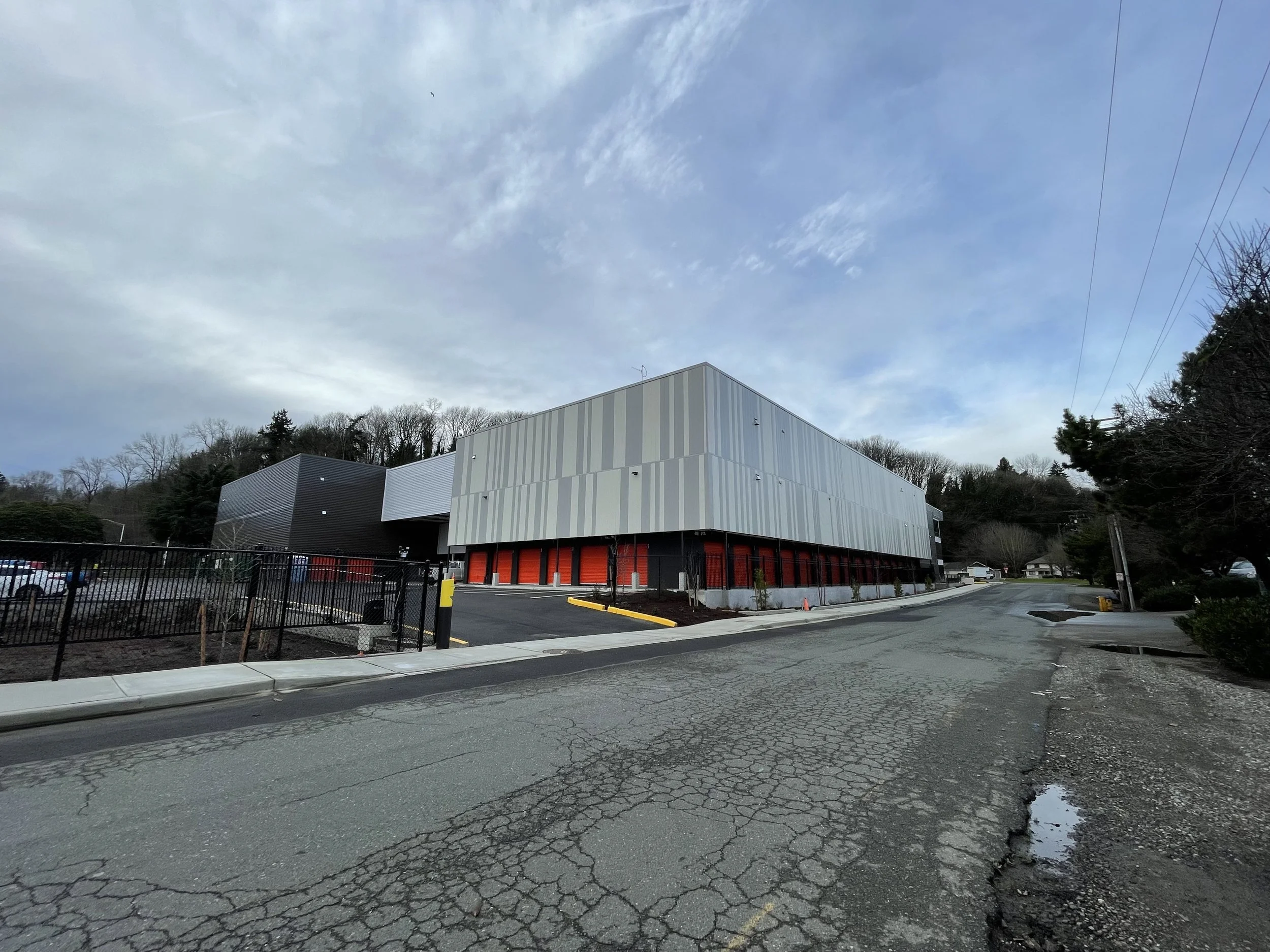
This self-storage facility is located in Tukwila, Washington, just minutes from Seattle-Tacoma International Airport. It sits in an industrial area right off the Green River, so the setting felt like a natural fit for the building type. This was the first project we completed with BRIXX, although we had worked with him previously as part of another development team. The project follows the same general approach as many of the self-storage facilities we had designed before the 2021 IBC code update, when self-storage was still allowed to be four stories in Type IIB construction.
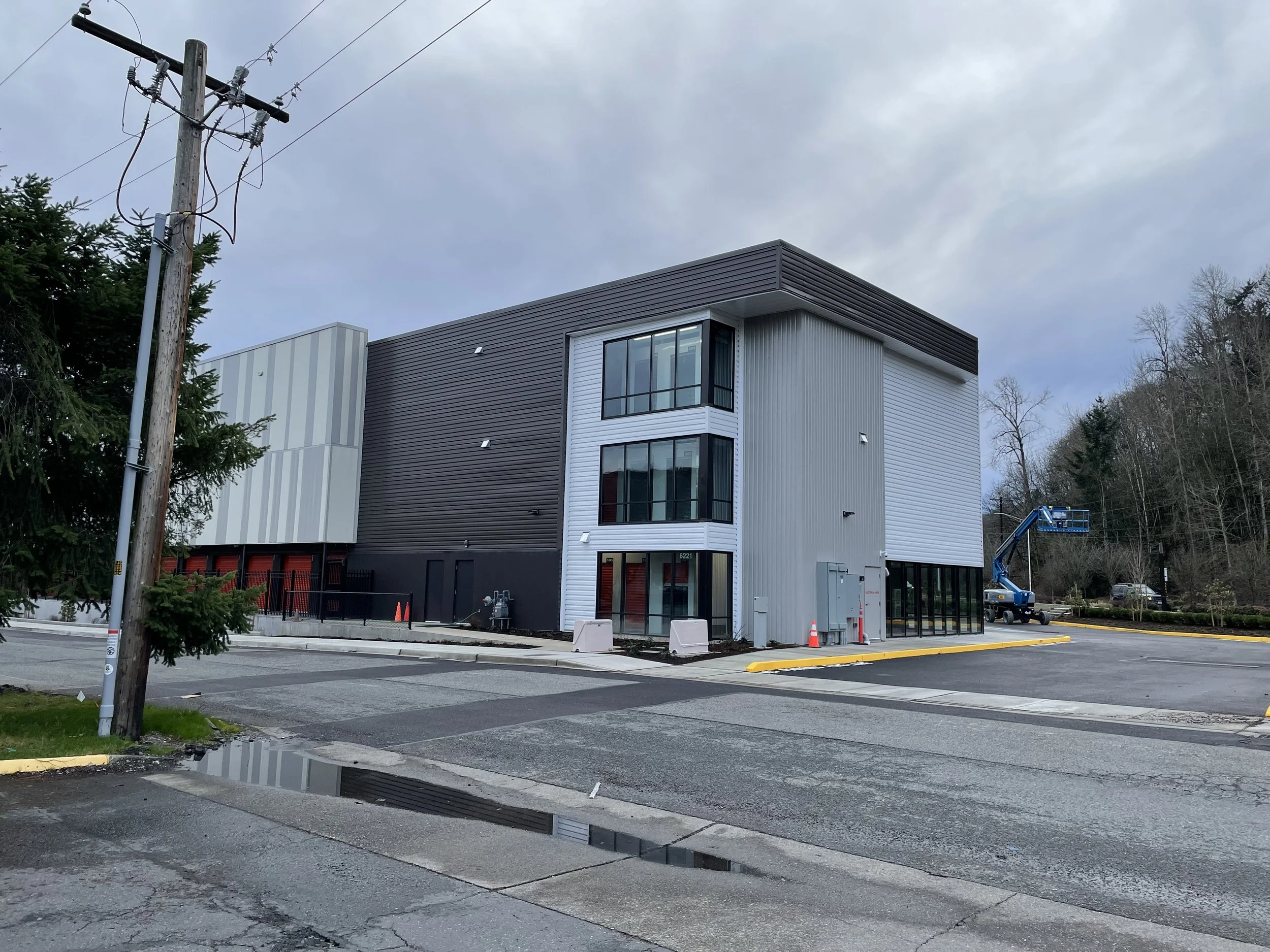
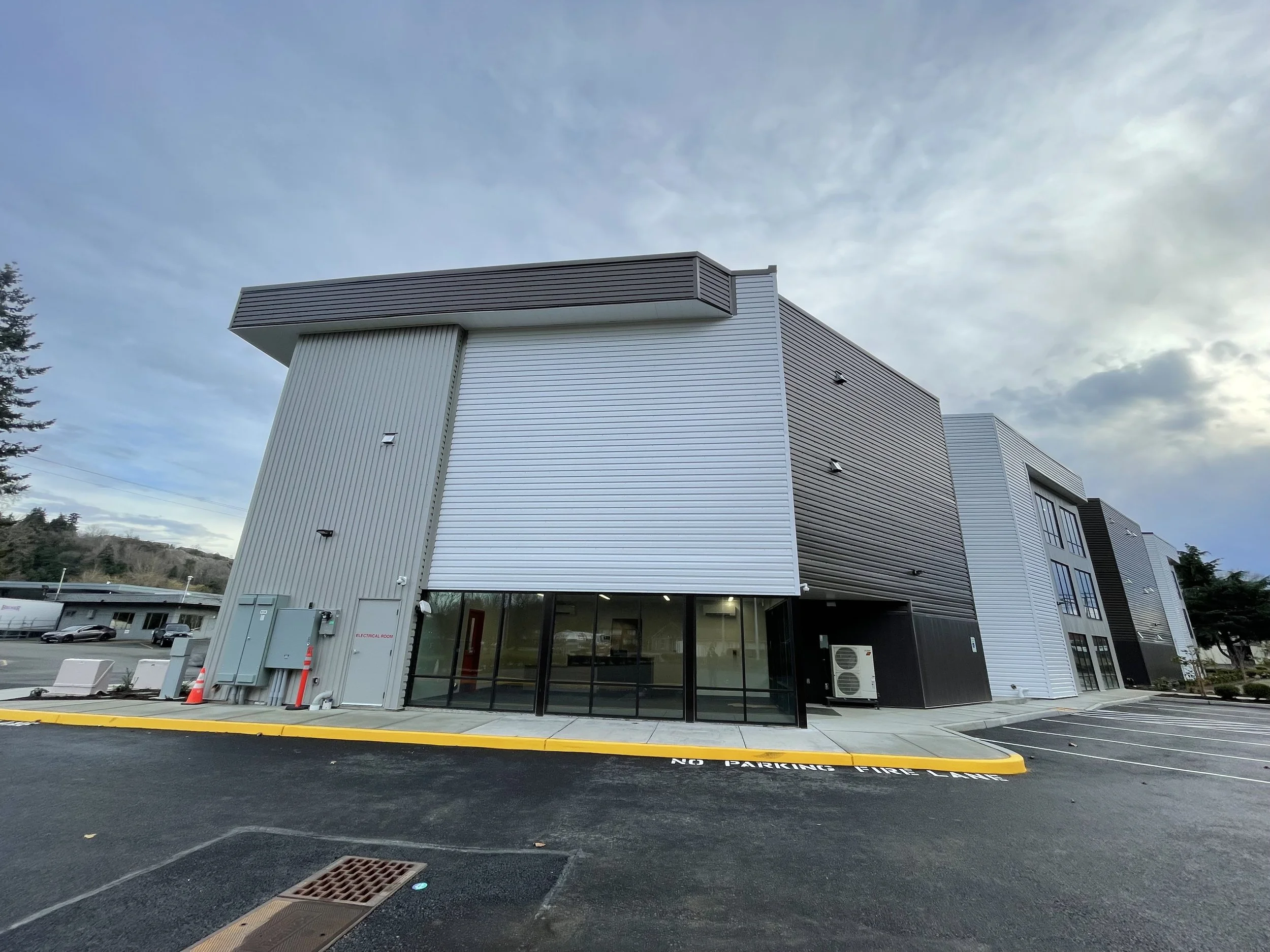
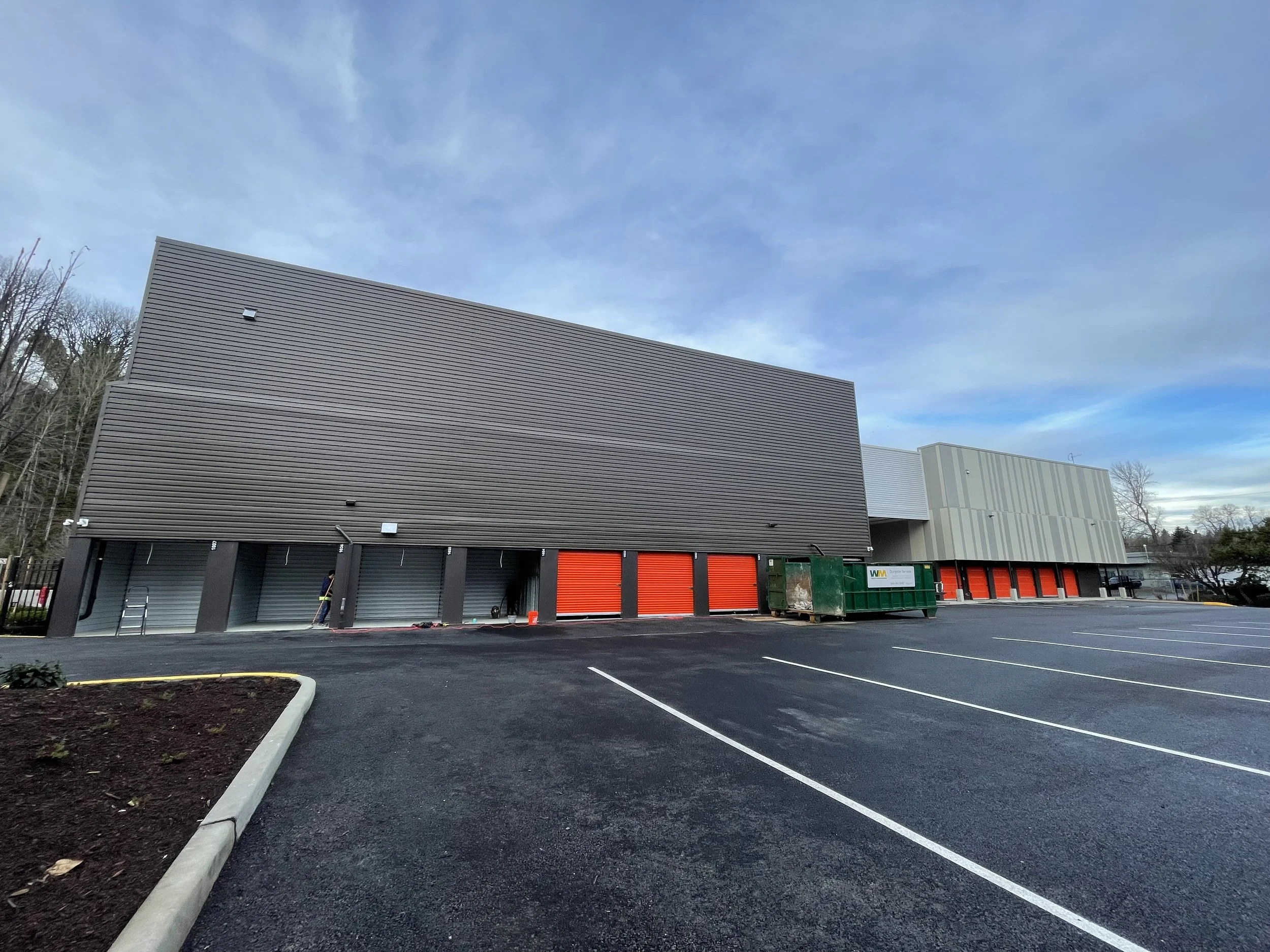
This building is three stories of steel construction, with a street-facing office up front. In the back, we included a loading bay for easy access and rental parking spaces to add flexibility for customers. By the time we took on this project, our team had already completed a number of self-storage facilities, so we were able to move efficiently while still making sure the layout and operations worked smoothly.
This project came with a couple of unique challenges. Because of how close it is to the Green River, the site sits in a floodplain, which meant we had to raise the building’s finished floor above the flood elevation. On top of that, the site required several stormwater retention systems, and those played a big role in how we approached the landscaping and overall site design.
Project Stats
Status | Completed - December, 2023
Location | Tukwila, Washington
Building Size | 102,572 SF
Site Size | 81,057 SF
Number of Units | 800 Units
Construction Type | Type IIB, Steel Stud Construction
Design Schedule | Dec 2019 - Feb 2022
Construction Schedule | Feb 2022 - Dec 2023
Why Self Storage?
Self-storage has become a real necessity in a lot of communities, especially as people live in smaller homes, move more often, and need flexible space that doesn’t come with a long-term commitment. It fills a gap that housing and commercial space can’t always solve, whether it’s for residents who are downsizing, families in transition, small businesses needing inventory space, or contractors storing tools and equipment close to the jobsite.
Because these facilities are so operations-driven, having an experienced architect on board makes a big difference for the developer. A team that understands self-storage can design a layout that maximizes rentable square footage, improves circulation and security, and supports long-term efficiency—all while meeting zoning, fire/life safety, and code requirements without unnecessary redesign. It also helps avoid expensive surprises during permitting and construction, since the building systems, access points, and site constraints are coordinated early and intentionally. In the end, good design isn’t just about how the building looks—it directly impacts how well the facility performs, how smoothly it gets built, and how quickly it can start generating revenue.
About the Design
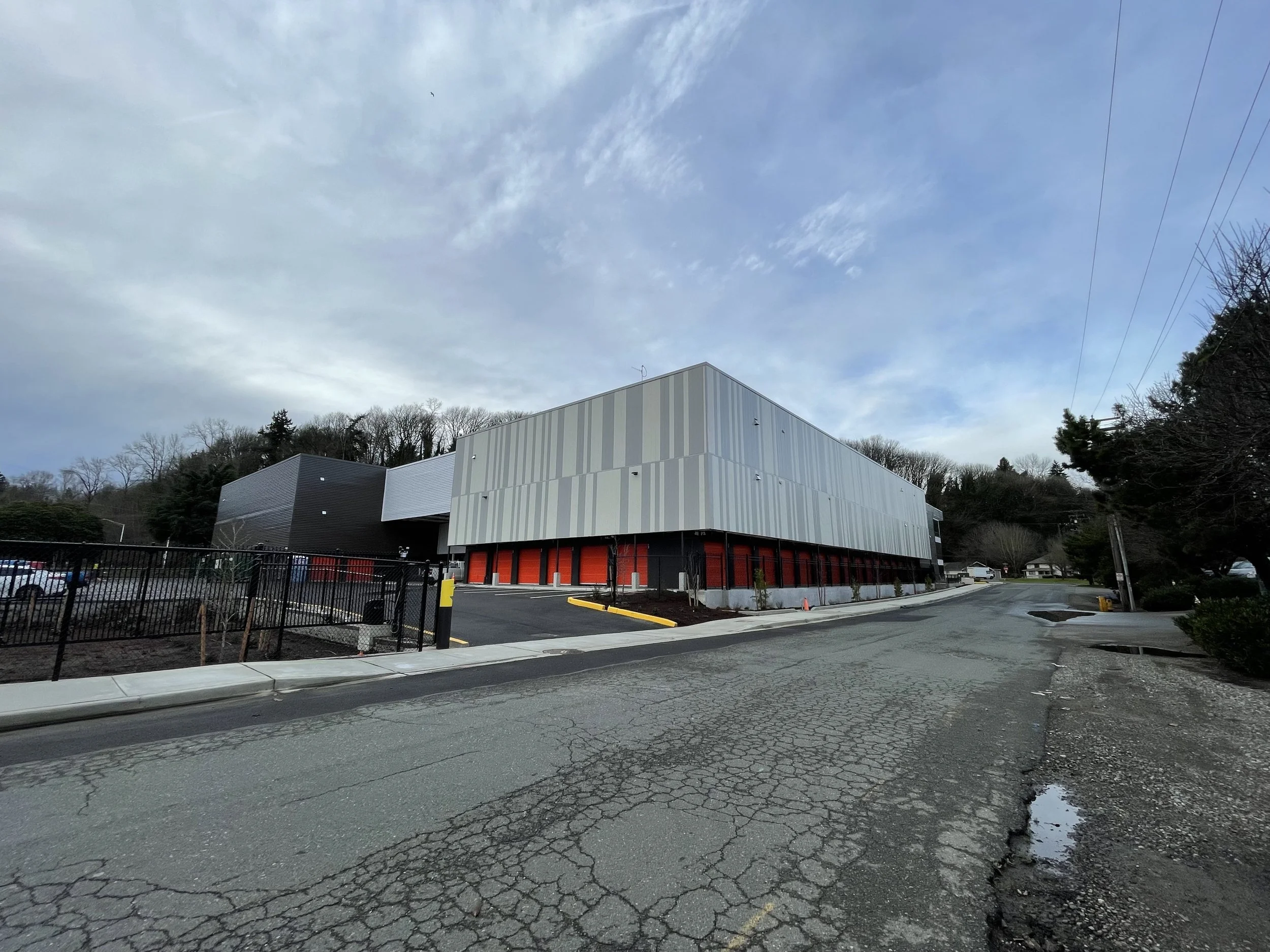
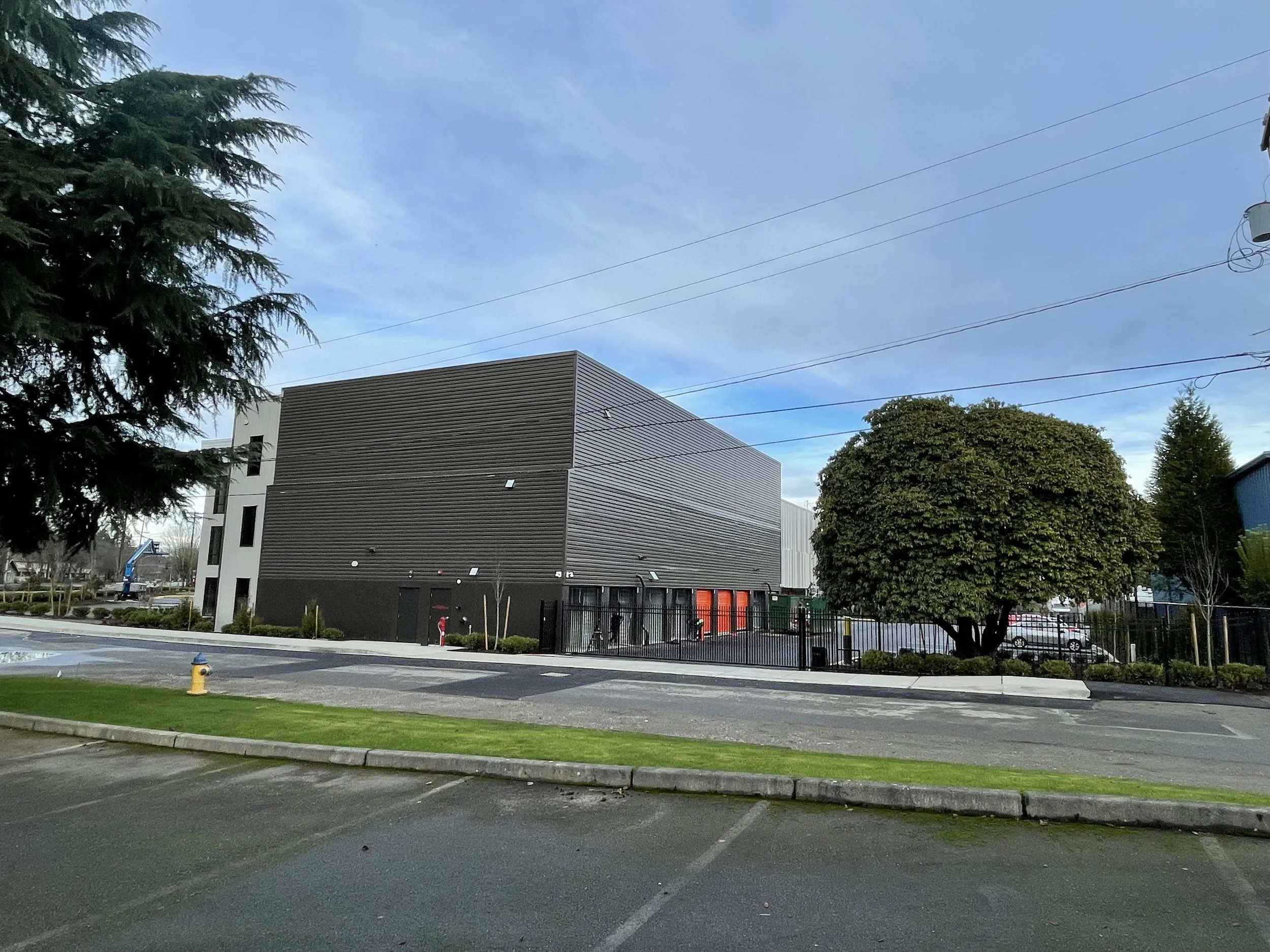
The exterior design took a lot of collaboration and fine-tuning between BRIXX, di’velept, and Tukwila’s zoning department. We went back and forth quite a bit to land on a solution that met the code, stayed within a tight budget, and still had enough variation to keep the building from feeling like one huge box along the highway. Since Interurban Ave is a major corridor through the area—and the building runs diagonally along it—we had a big opportunity to shape how the project is experienced from the street.
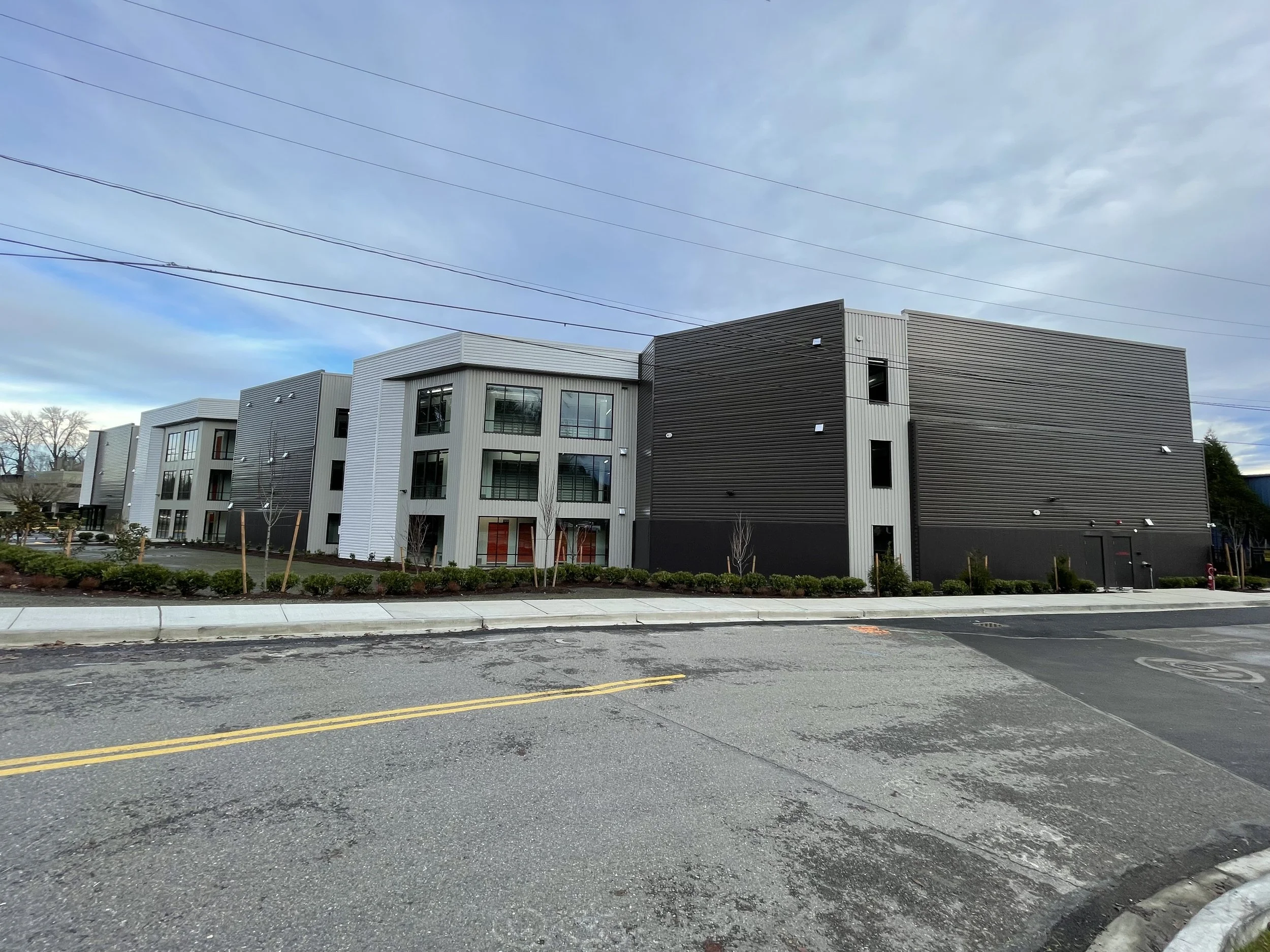
To break down the massing, we divided the building up in a few different ways. A darker base wraps the perimeter at Level 1, and then the colors shift above at Level 2 and up to help visually lighten the upper floors. Along Interurban Ave, the facade is broken into five sections with varying heights that alternate between dark and light color schemes, giving the elevation more rhythm and movement as you drive by. On the north side, we added a patterned accent wall made up of one-foot-wide metal panels in alternating colors, which adds texture and interest to what would otherwise be a long, flat facade.
Every successful project is the result of teams of talented people working together in order to make the project a success. The owners and stakeholder groups play a huge role in defining the goals and objectives of the project. It is their vision for what they want to accomplish that really allows us to be successful in our work. Architects and Engineers make up the design team that is responsible for planning out and documenting everything that goes into making a building. Once the project is fully documented it is then in the hands of skilled craftsmen and trade workers who make up the construction team that physically brings the design into existence.
We would like to thank all of those who worked on this project to make our vision a reality by giving credit here with links to their websites.
A Collaborative Effort
Structural | HW Engineering
MEP| Royal Engineering
Landscape & Civil | Core Design
Geotechnical | Terracon
Construction Team
General Contractor | Perlo Construction
Stakeholders
Owner | Brett McDonough, BRIXX
Design Team
Project Management & Design
Building Design (SD, DD, CDs)
We designed the building from the earliest layout studies all the way through construction documents. Our process usually starts with a simple question: is the site even viable for what the client needs? For this project, that meant looking closely at the parcel constraints and confirming we could fit the amount of rentable square footage BRIXX needed for the project to pencil.
Once we knew we could make the numbers work, we moved into early planning and layout development. We tested multiple internal configurations to land on the right unit mix and circulation plan BRIXX was aiming for. That included dialing in the corridor efficiency, the size and spacing of storage units, and how customers would move through the building. At the same time, we were coordinating structural layout and construction type decisions so the design could stay efficient and cost-conscious as it developed.
From there, we progressed through design development by tightening up the building systems and exterior design decisions, coordinating life safety requirements, and making sure the project stayed aligned with both zoning expectations and operational needs. Once the design direction was locked in, we carried it through full construction documents—producing a set that clearly defined the building layout, envelope, structure, and coordination points so the project could move into permitting and pricing with confidence.
Permitting
Permitting was primarily led by BRIXX, with Brett communicating directly with the city and plan reviewer. For much of the process, our role was to support that effort by providing plan updates, clarifications, and responses as needed. But as permitting progressed—and the review comments became more detailed—we got more directly involved.
At that point, it became less of a straightforward review cycle and more of a true back-and-forth with the city. We worked closely with BRIXX to respond to questions, adjust drawings, and resolve items that required design clarification or code interpretation. That extra coordination helped keep the project moving and prevented key issues from stalling the timeline.
Design Schedule
The design process took a little longer than expected due to the ongoing back-and-forth between the project team and Tukwila’s zoning department. Once the exterior design was fully approved and we had a clear direction, things moved quickly. From there, we were able to push through construction documents efficiently and get the project ready for permitting.
Construction Phase
During construction, we stayed involved through the CA process. We conducted monthly site visits to track progress, confirm design intent, and help address field conditions as they came up. We also supported the contractor by responding to RFIs and reviewing submittals, making sure everything stayed aligned with the documents while still being buildable and realistic in the field.
A big part of our construction involvement came down to coordination with the city, especially when real site conditions didn’t match what was expected early on. Most of the design changes and conversations centered around the stormwater system, since grading and utility locations ended up landing differently than originally planned. We worked through those adjustments with the team and the city to keep things compliant, functional, and moving forward without losing momentum.
Construction Schedule
Construction also ended up taking longer than a typical self-storage project, mostly due to a few stop-and-start moments along the way. Starting in the middle of a Seattle winter didn’t help either—constant rain made concrete work especially challenging and created some delays early on. On top of that, the site brought a few unexpected complications, including stormwater system issues and conflicts with existing power lines. We worked closely with Perlo to solve those challenges in real time and keep the project moving while still staying true to the original design intent. In the end, Perlo did a great job pulling everything together, and the project came out as a strong final product.
Architecture Project Management
Architecture Team
Managing Principal | Jeremy Larsen
Project Manager | Ethan Barley
Support Staff |Jarod Hall, Marin Smith, Gabrielle Kemberling, Shari Hastie
Project Scope
Building Design (SD, DD, CDs) | A full scope of building design services was provided including everything from the initial schematic design concept to developing the design and completing full documentation of the building plans. This phase of work also included navigating a design review process with the city and obtaining the proper jurisdictional approvals for the design.