
Matson Hill
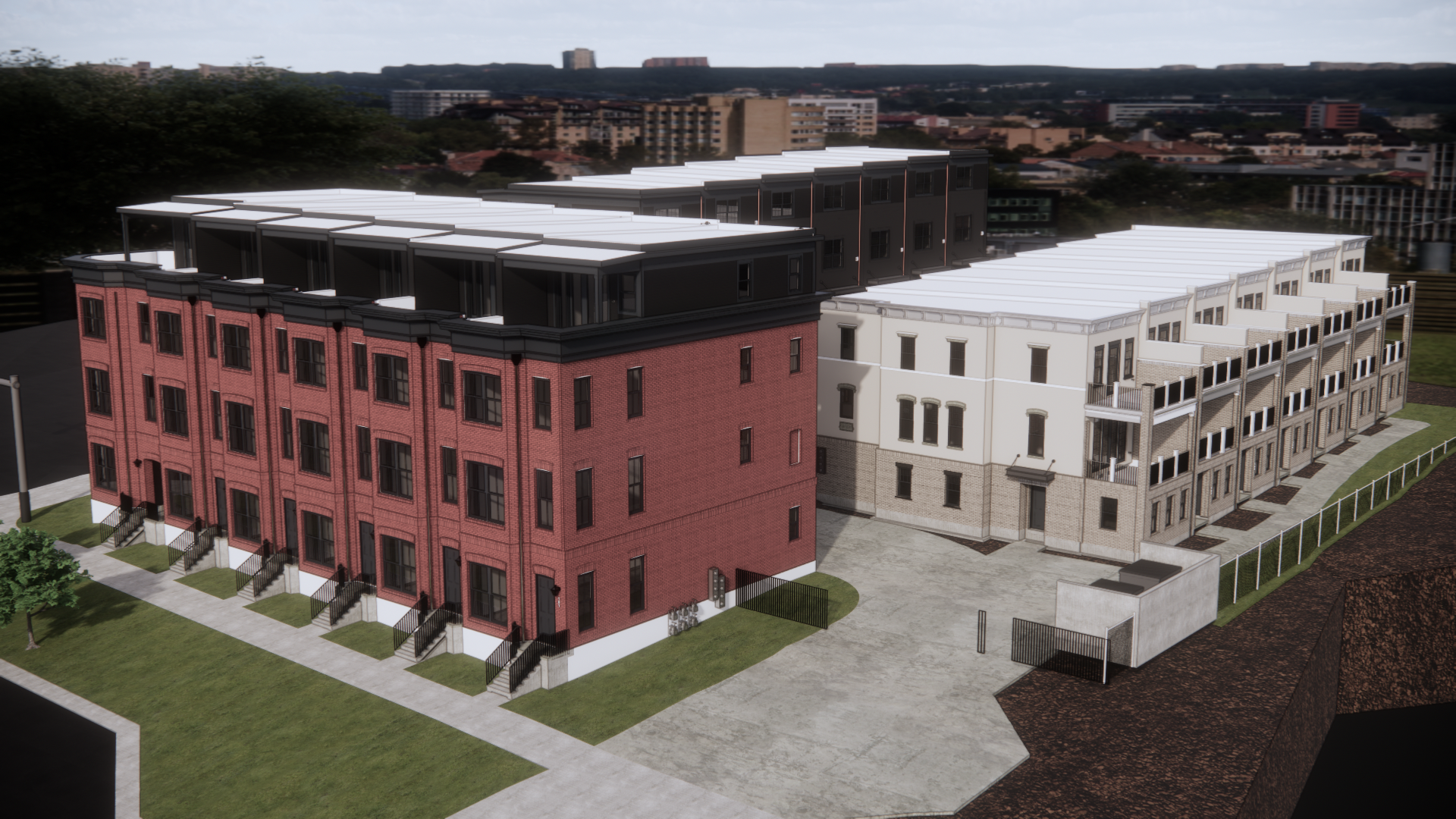
Matson Hill is a new townhouse development currently under construction at 910 East 400 South in Salt Lake City, Utah. The project transforms the former Village Inn site into a dense residential infill community, bringing contemporary attached housing into an established neighborhood in a way that feels intentional and well-placed.
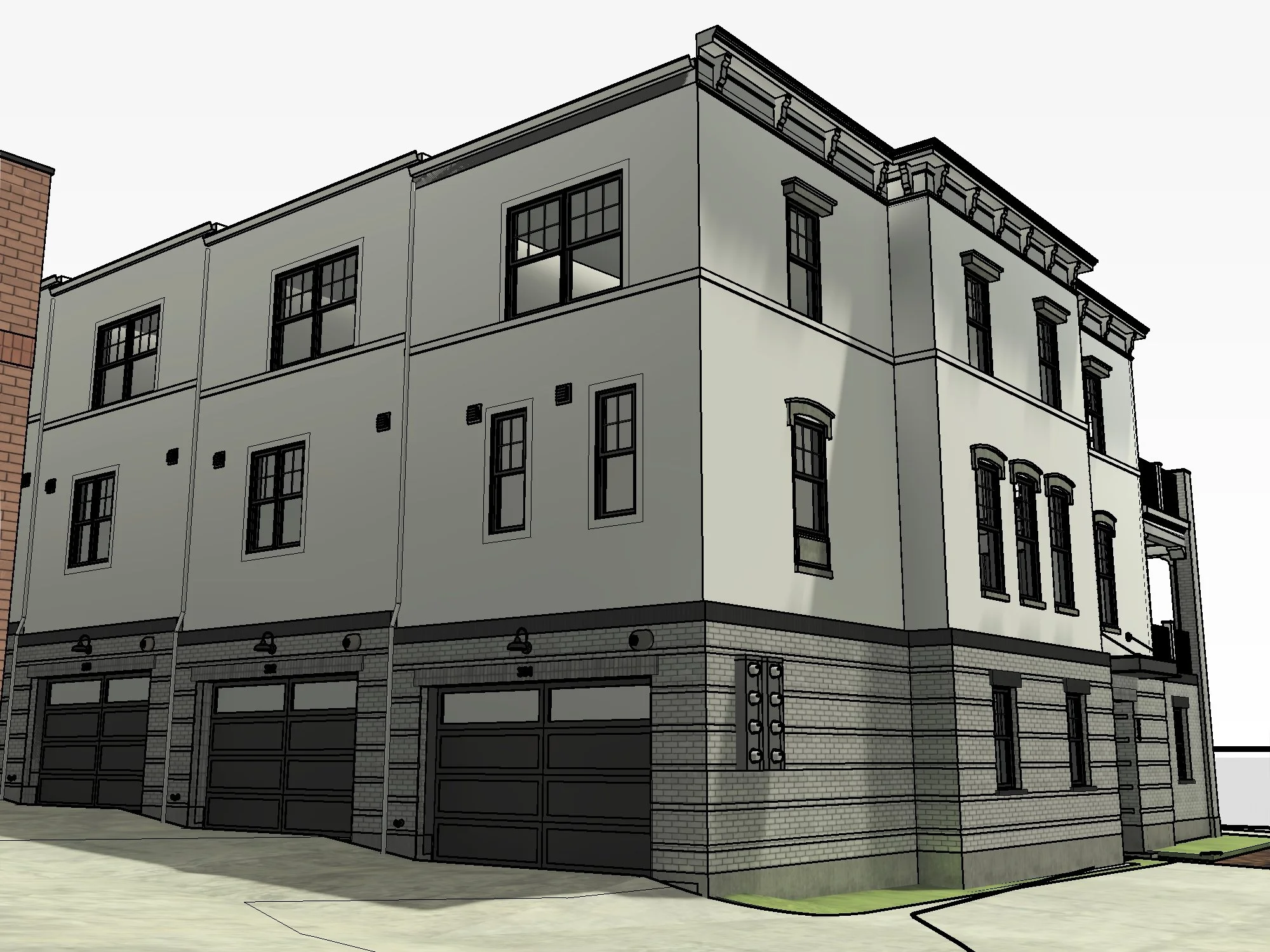
Developed by Urban Alfandre through its newly launched townhouse-focused branch, Kensington, the project will deliver 20 for-sale townhomes across three buildings on a 0.76-acre site. di'velept served as Architect of Record and worked alongside architect Dan Morales to develop a cohesive architectural vision that supports higher density while still prioritizing livability, comfort, and a strong neighborhood presence.
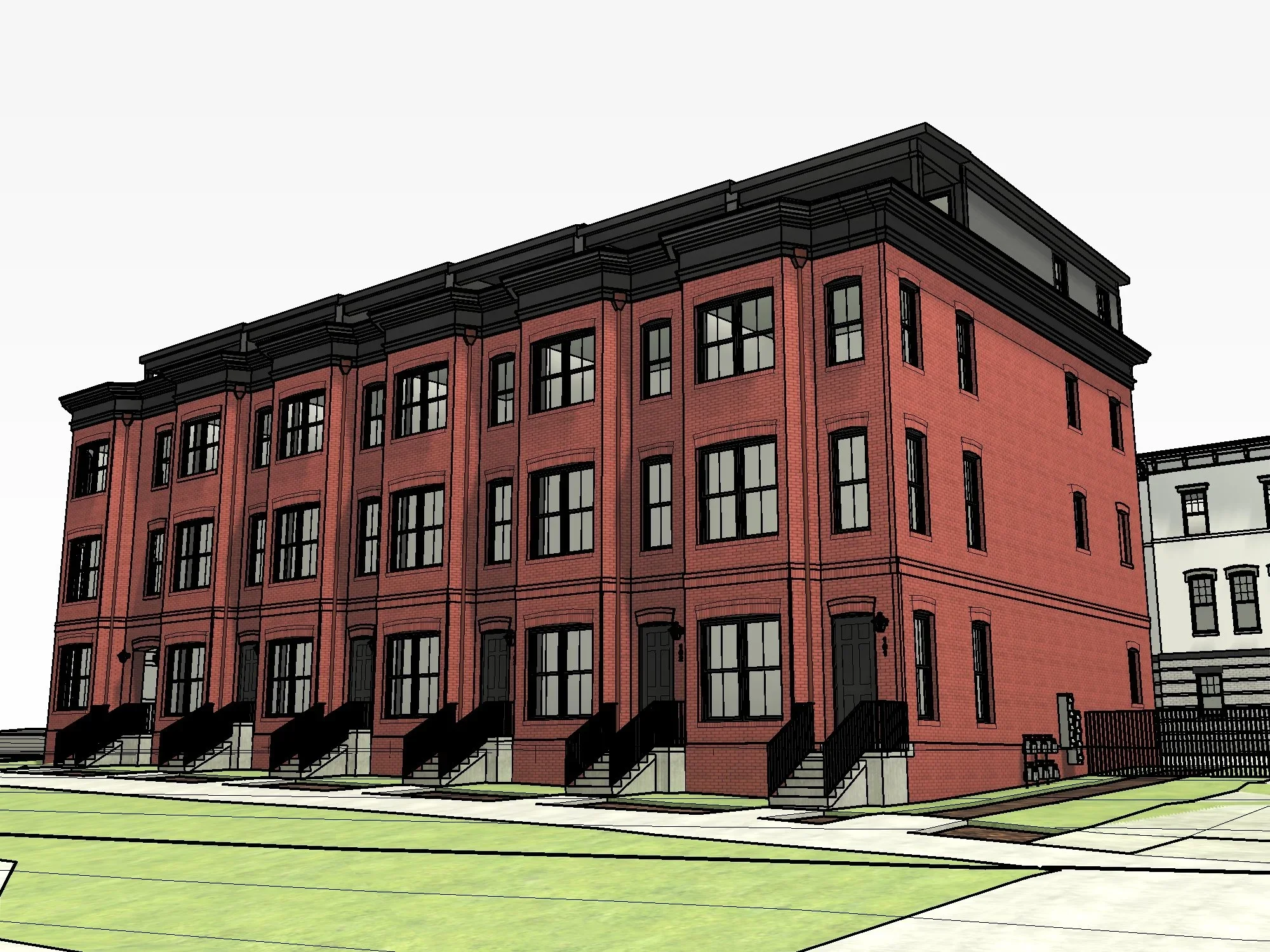
Matson Hill was designed to be a timeless and refined townhouse development. The design pulls from the rhythm, proportions, and charm of historic townhomes, but reinterprets them through a contemporary lens to create homes that feel both modern and enduring.
Status | Under Construction
Location | 910 East 400 South, Salt Lake City, UT
Building Size | 33,053 SF
Site Size | 33,079 SF
Number of Units | 20
Construction Type | Residential Wood Construction
Design Schedule | January 2025 - November 2025
Zoning and Site Context
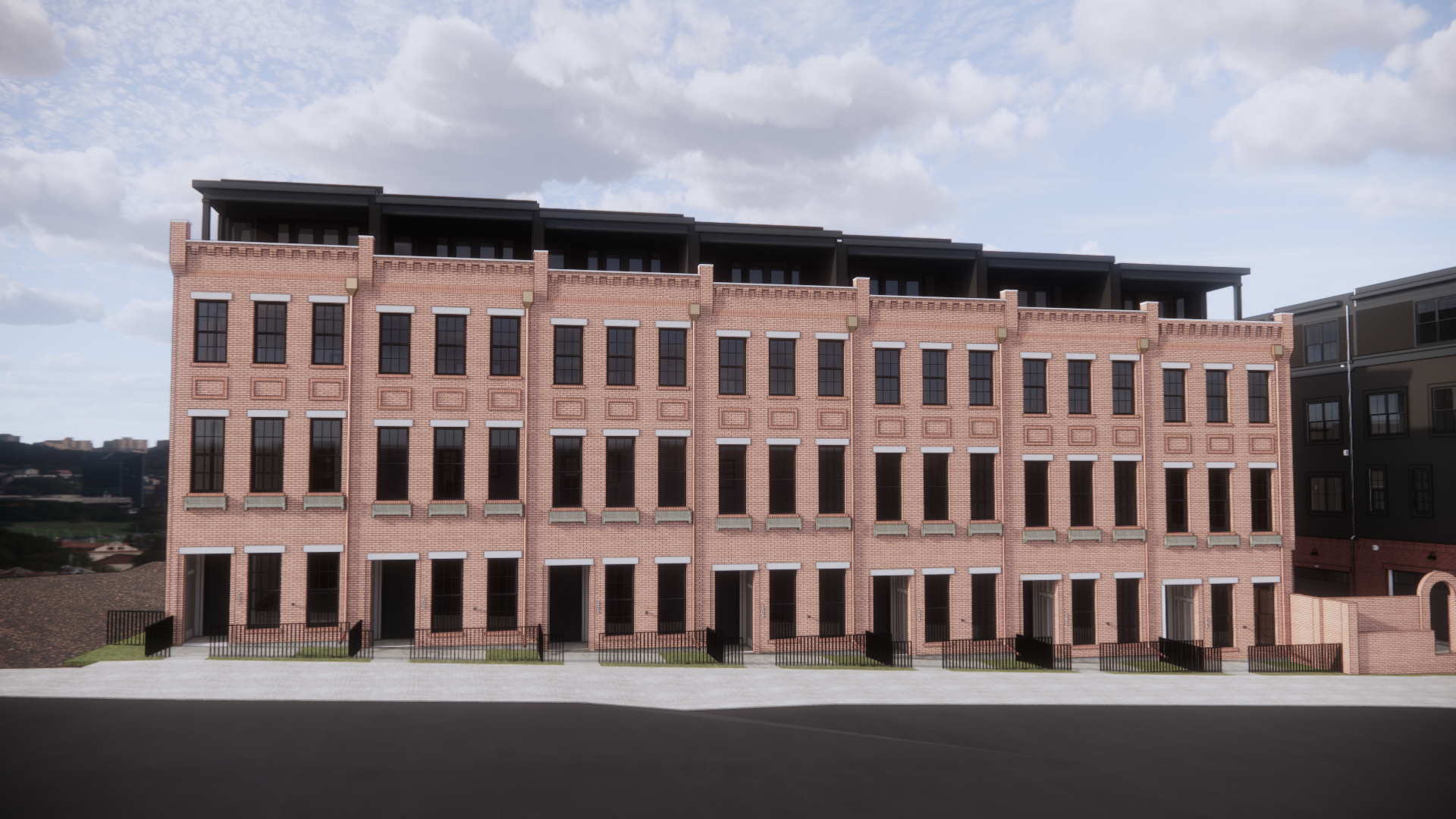
Matson Hill is located in Salt Lake City’s TSA-UN-T zoning district (Transit Station Area – Urban Neighborhood – Townhouse), which is geared toward medium-density, attached housing and encourages development that uses land efficiently while still keeping the street experience active and pedestrian-friendly. Projects like this are an important part of how cities grow in a way that actually works long-term. Instead of pushing development farther and farther outward, urban infill focuses on building in places where infrastructure already exists—close to jobs, schools, transit, and everyday services. Adding more housing in walkable areas gives more people the chance to live near the places they need to be, which can help reduce traffic, support local businesses, and make transit more successful, all while addressing the housing shortage without losing the character of the city.
The site sits at the corner of 900 East and 400 South, and the zoning standards played a big role in shaping how the buildings came together. The code allows up to 50 feet in height, doesn’t require a corner yard setback along 900 East, and increases side and rear yard setbacks depending on how tall the buildings are. These standards directly informed and impacted the massing early on and ultimately pushed the project toward a layout of three separate buildings instead of one large structure.
On top of that, the design standards required frequent building entries, limits on the length of blank walls, active ground-floor frontage, and more articulation along the facade. Rather than treating zoning as a constraint, the project leans into them—using them to create a clear, townhouse-scaled environment that feels natural in an urban infill setting.
About the Design
Project Description
The exterior design for Matson Hill was all about finding the right balance between traditional townhomes with a clean, modern approach. Even though the project brings a lot of homes onto one site, the buildings are broken down with strong vertical proportions and a consistent rhythm so they still feel residential and approachable.
A big part of the design is using repetition in a way that still feels varied and intentional. Along the street front, the facades are designed to feel rhythmic and active. Individual unit entries, repeating window bays, and vertical breaks help create that “rowhome” feeling instead of reading as one long building. You get the sense that these are individual homes stitched together, not one massive structure.
Overall, the design keeps the proportions familiar and grounded—so it fits naturally into the area—while the detailing, material choices, and layout keep it feeling fresh and contemporary. It’s a project that brings density to an urban corner, but still feels like a place made up of individual homes, not just a single large development.

Interior Planning and Layout
The interior layouts are designed to be simple, clear, and easy to live in. The ground floor is usually where you’ll find the garage, entry, and either a flexible bonus space or a guest bedroom, depending on the unit type. From there, the homes are organized vertically in a way that makes sense—living spaces in the middle, and bedrooms tucked above for more privacy.
The main living level keeps things open and bright, with the kitchen, dining, and living areas connected in one open-plan layout. This helps bring in more daylight and makes the space feel bigger and more efficient. Bedrooms on the upper floors are laid out to feel private, but still easy to access, and outdoor areas like roof decks and balconies add that extra bonus space that really improves day-to-day livability.
Overall, the layouts are built for long-term comfort, but they’re also flexible enough to work for different types of households and lifestyles over time.
Unit Types
Matson Hill includes five distinct unit types distributed across three buildings, each responding to its location on the site, street exposure, and entry conditions. Together, these unit types provide a range of living options while maintaining a coherent architectural and spatial framework across the development.
Unit Type A
Unit Type A is the largest home in the project and sits at the northwest corner of the site. On the ground floor, it includes a primary suite, a laundry room, and a two-car garage. The second floor is the main living level, with an open kitchen, dining, and living space that gives the home a bright, comfortable place to gather. The third floor has three additional bedrooms, and the fourth floor adds a fifth bedroom that opens directly onto a roof deck that adds about 320 square feet of outdoor living space. Overall, this unit is the most spacious and flexible option in the development.
Unit Types B and C
Unit Types B and C make up most of the homes in the project, and they share the same overall layout and bedroom count. The second floor is where the main living happens, with the kitchen, dining, and living space all grouped together to create an open, functional layout. These units include two bedrooms on the third floor, plus a third bedroom on the fourth floor. The upper-level living spaces connect directly to private roof decks, which helps extend the living area outside and creates that indoor-outdoor feel at the top level.
Unit Type D
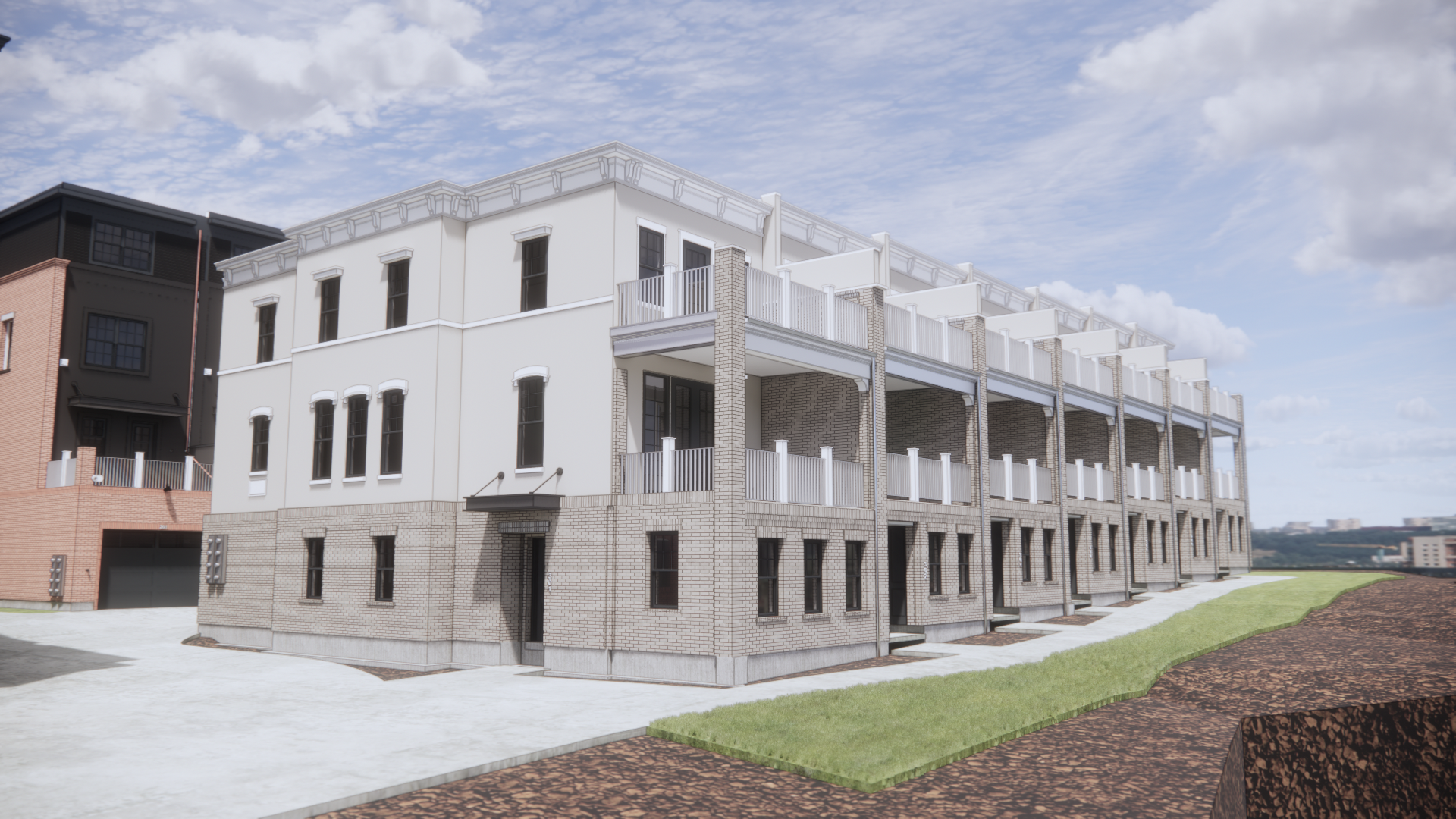
Unit Type D offers a slightly different setup. Instead of having a bedroom on the ground floor, these units include a flexible bonus room on the first level that can be used however the homeowner needs. The second floor is the main living level, with an open kitchen, dining, and living area that functions as the center of the home. Two bedrooms are located on the third floor, and outdoor space comes through balconies on both the second and third levels. It’s a great option for someone who wants multiple outdoor spaces.
Unit Type E
The single Type E unit is similar to Type D, but with one key change. Instead of the ground-floor bonus room, it includes a full bedroom on the first level. This adjustment responds to the unit’s partial street frontage and entry condition, increasing residential activation along the public edge while maintaining consistency with the overall building organization. The second floor still holds the main living space, with the kitchen, dining, and living areas with a balcony to extend the living area to the outdoor space. Again, the third floor hosts two bedrooms and an additional balcony for private, outdoor living
Site and Parking Strategy
Parking is mostly handled through tandem garages, which helps the project meet zoning requirements without relying on a bunch of surface parking. This approach keeps the site feeling more residential and walkable, and it frees up space for better circulation instead of turning the project into a sea of drive aisles. Fire access, service areas, and required landscape buffers were fully integrated into the site plan.
Overall, the site layout is designed to prioritize residential entries and walkability, reinforcing the project’s alignment with transit-oriented development principles and urban infill goals
Every successful project is the result of teams of talented people working together in order to make the project a success. The owners and stakeholder groups play a huge role in defining the goals and objectives of the project. It is their vision for what they want to accomplish that really allows us to be successful in our work. Architects and Engineers make up the design team that is responsible for planning out and documenting everything that goes into making a building. Once the project is fully documented it is then in the hands of skilled craftsmen and trade workers who make up the construction team that physically brings the design into existence.
We would like to thank all of those who worked on this project to make our vision a reality by giving credit here with links to their websites.
The Design Team
Stakeholders
Owner | Urban Alfandre / Kensington Home Company
Design Team
Collaborating Architect | Dan Morales
Civil | Wilding Engineering
Structural | York Engineering
MEP | Royal Engineering
Landscape | Landform Design Group
Interior Design | Vida Design Group
Construction Team
General Contractor | Dojo Construction
Architecture Project Management
Architecture Team
Managing Principal | Jarod Hall
Project Manager | Tyler Froelich
Designer | Stephanie Davis
Project Scope
Building Design (SD, DD, CD, CA) | A full scope of building design services was provided including everything from the initial schematic design concept to developing the design and completing full documentation of the building plans. This phase of work also included navigating a design review process with the city and obtaining the proper jurisdictional approvals for the design.
Looking Ahead
Matson Hill demonstrates how contemporary townhouse development can transform underutilized commercial sites into cohesive, high-quality residential environments. Through careful attention to zoning requirements, architectural expression, and unit planning, the project delivers a refined urban infill development that contributes meaningfully to Salt Lake City’s evolving residential fabric.
Thank you for taking the time to learn about this project. We invite you to explore more of our work and see how our unique approach to architecture can bring your vision to life. We look forward to the opportunity to work with you to create homes that stand out and bring joy to their residents or any other building type you may be in need of.