
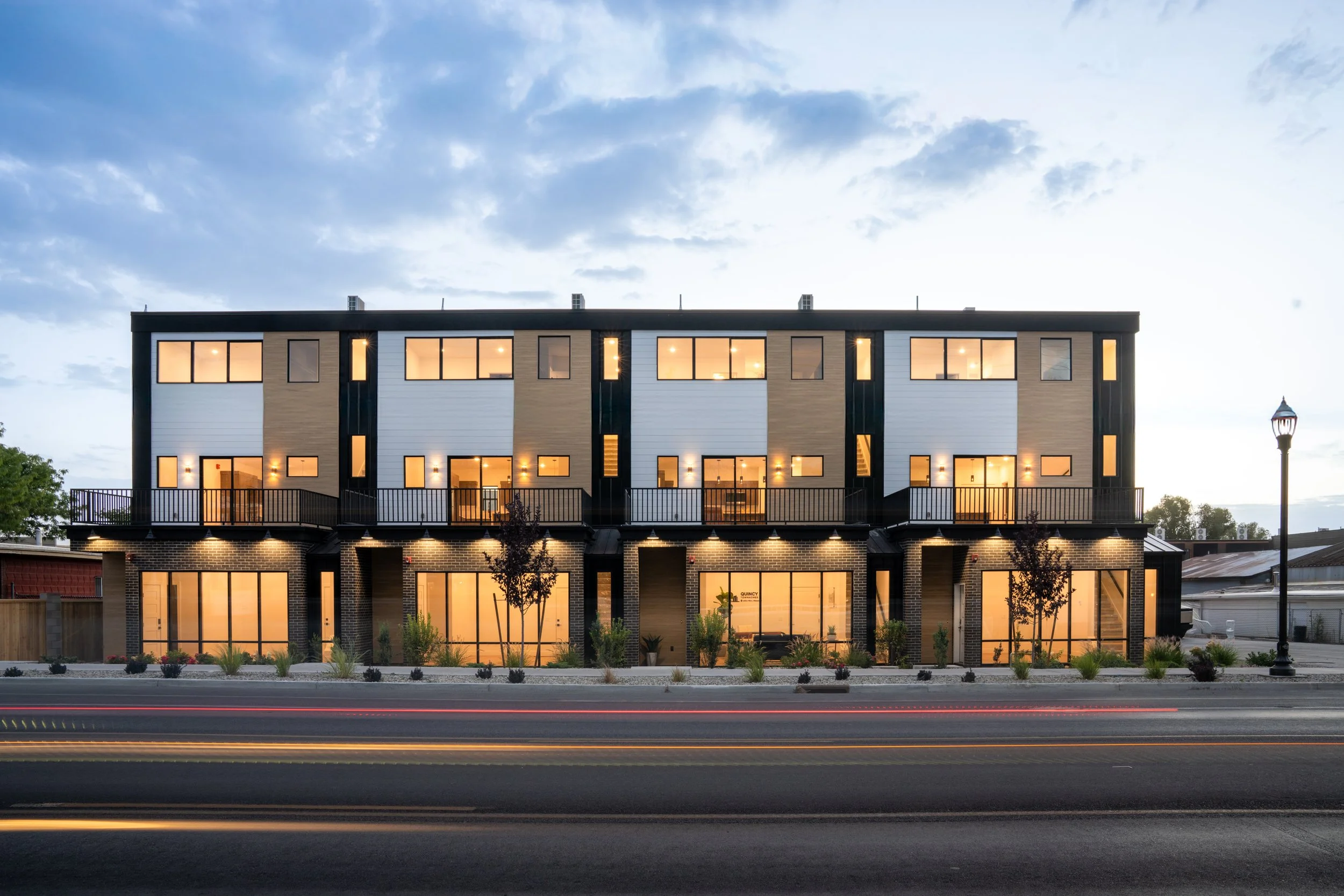
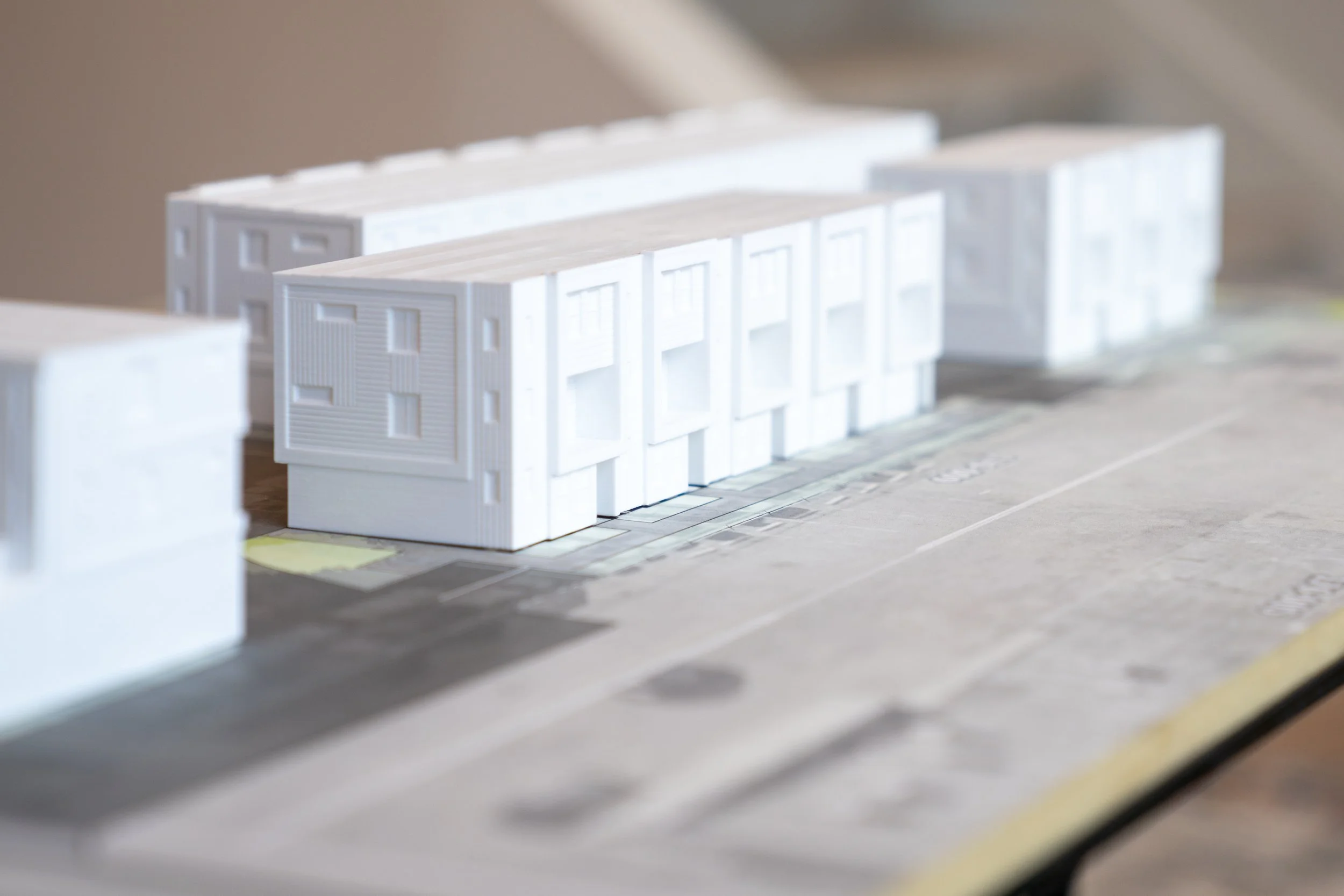
Completed in July 2025, the Quincy Townhomes development in Millcreek, Utah, represents a significant step in addressing the dual pressures of housing demand and mixed-use zoning requirements along the 900 East corridor. Developed by Strength PC under the leadership of Matt Strong, designed by di’velept, and built by J-Corp Development, the project delivers 20 residential units across multiple buildings on a site of just over 43,000 square feet.
The townhomes sit within Millcreek’s C-2 Commercial Zone, which requires vertically integrated mixed use. Quincy’s design solution shows how we met the zoning obligations while also delivering livable, desirable homes. The four units facing 900 east are live–work townhomes with ground-level commercial flexibility. The interior units are more private, as they did not require this integrated use.
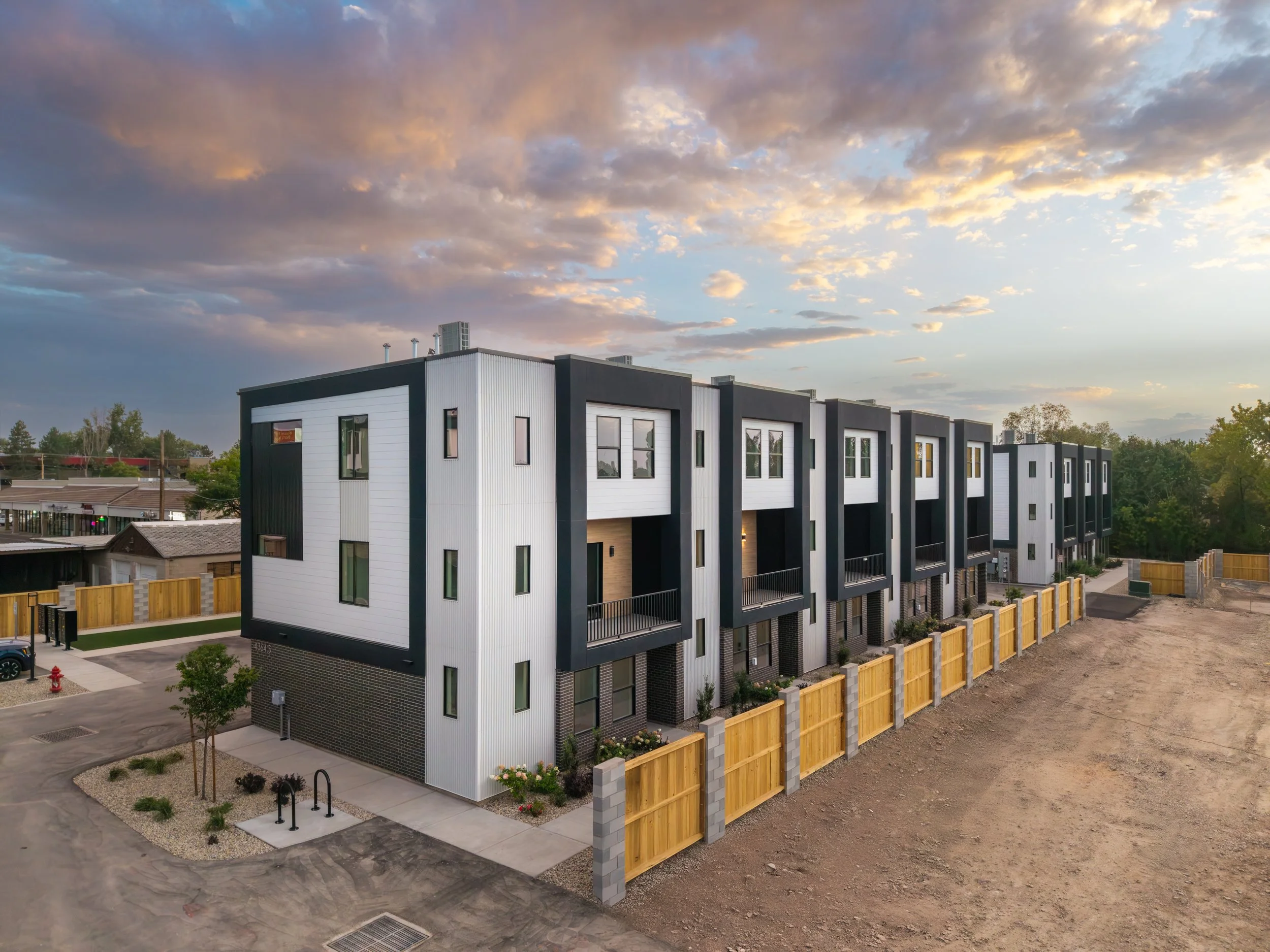
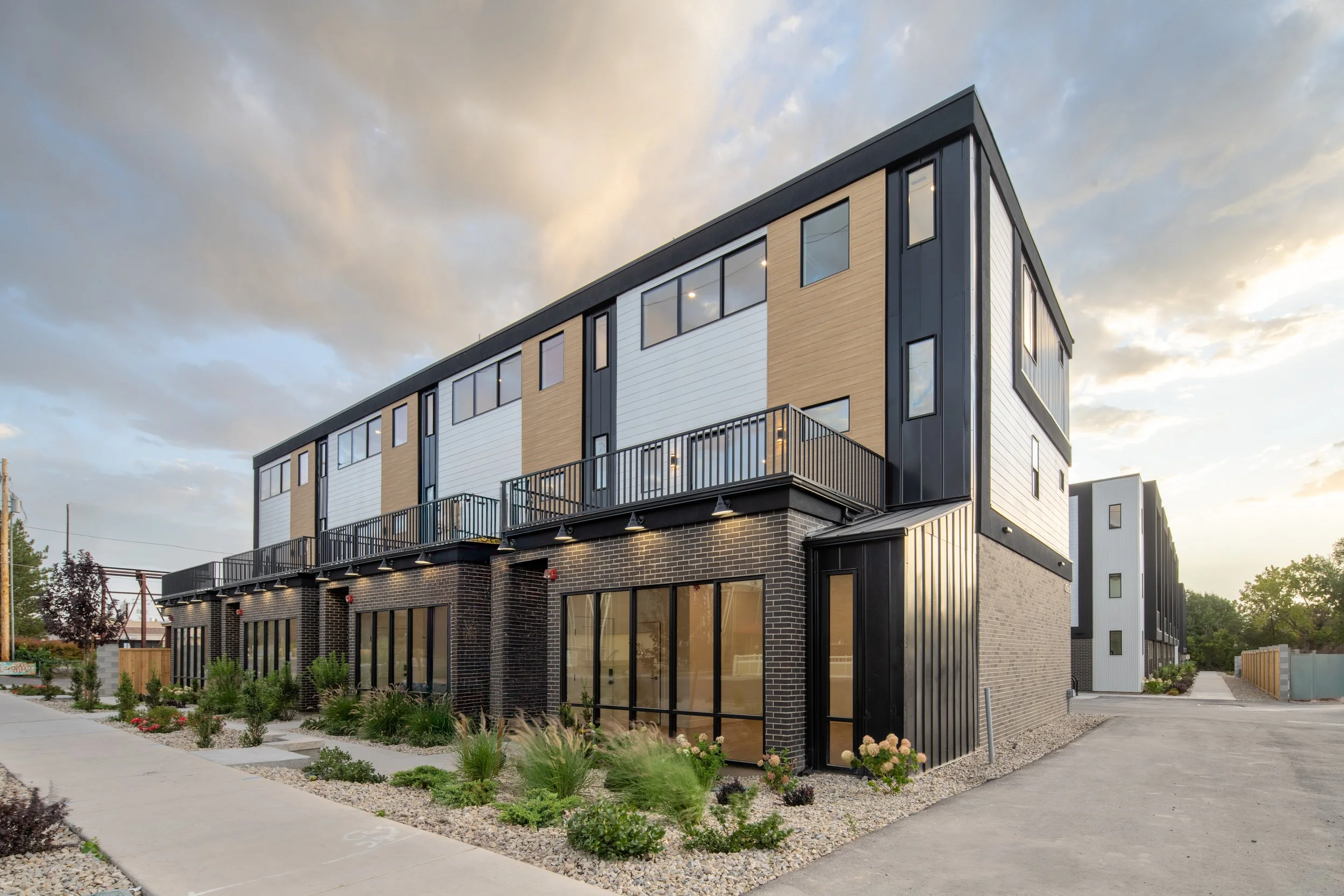
The neighborhood-scaled development has a clear architectural identity: crisp, contemporary lines, warm wood accents, and a durable masonry base. The Quincy Townhomes demonstrate how zoning requirements and architectural design can work hand in hand. Thoughtful planning and careful execution can meet city regulations while still producing homes that are comfortable, attractive, and well-suited for the people who will live in them.
Quincy Townhomes
Status | Completed - July 2025
Location | 4372 S 900 E, Salt Lake City, UT
Building Size | 46,300 SF
Site Size | 43,275 SF
Number of Units | 20
Construction Type | Residential Wood Construction
Design Schedule | Oct 2021 - Feb 2024
Construction Schedule | Mar 2024 - Jul 2025
About the Design
Designing for Zoning
The site is in Millcreek’s C-2 zone, which is a commercial district. That means housing is allowed, but only if it’s part of a mixed-use project. For Quincy, that translated into designing the street-facing homes with commercial or office space on the ground floor. This helps bring activity to the sidewalk and keeps the project aligned with the city’s zoning rules.
Instead of separating housing and shops the way many suburban townhome projects do, Quincy blends them together in the same building. Each unit includes both a living space and a commercial component. This matches Millcreek’s long-term plan for corridors like 900 East—places where people can walk to what they need and where daily life, work, and local businesses can all happen in the same neighborhood.
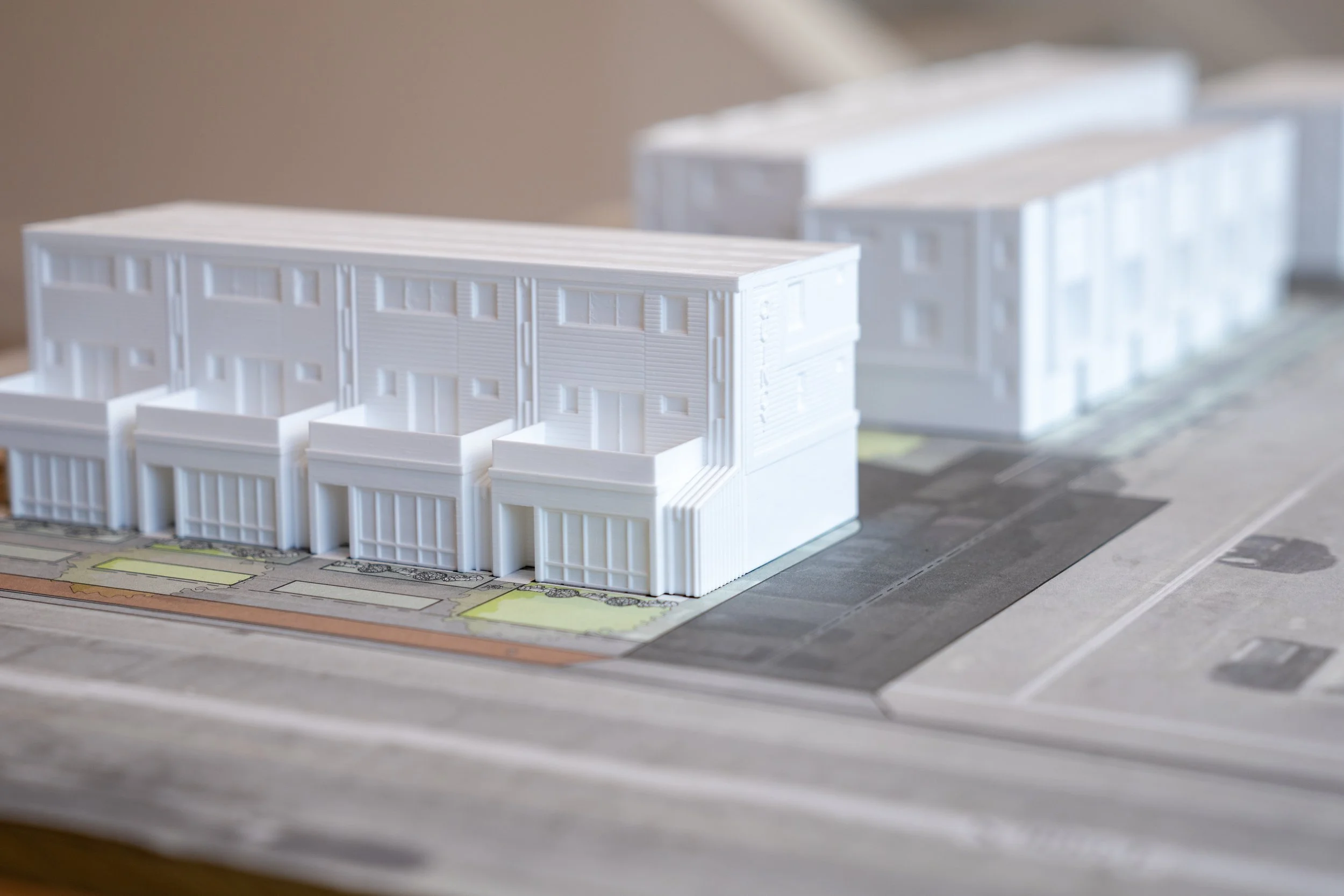
Those zoning requirements shaped the overall design approach. We focused on creating two unit types, making sure the street-facing units address both the commercial frontage and residential privacy. At the same time, the plan had to balance practical needs like open space, parking, and drainage, all while staying within the city’s limits for height and site coverage.
Design Strategy
Once we understood the zoning requirements, we were able to really dig in and design an amazing project. Architecturally, the intent of Quincy’s design is twofold. First, it connects the building to the urban corridor context through a storefront-like presence at street-level. Second, to deliver a contemporary residential character above reflecting the kind of medium-density housing Millcreek is encouraging as the area evolves.
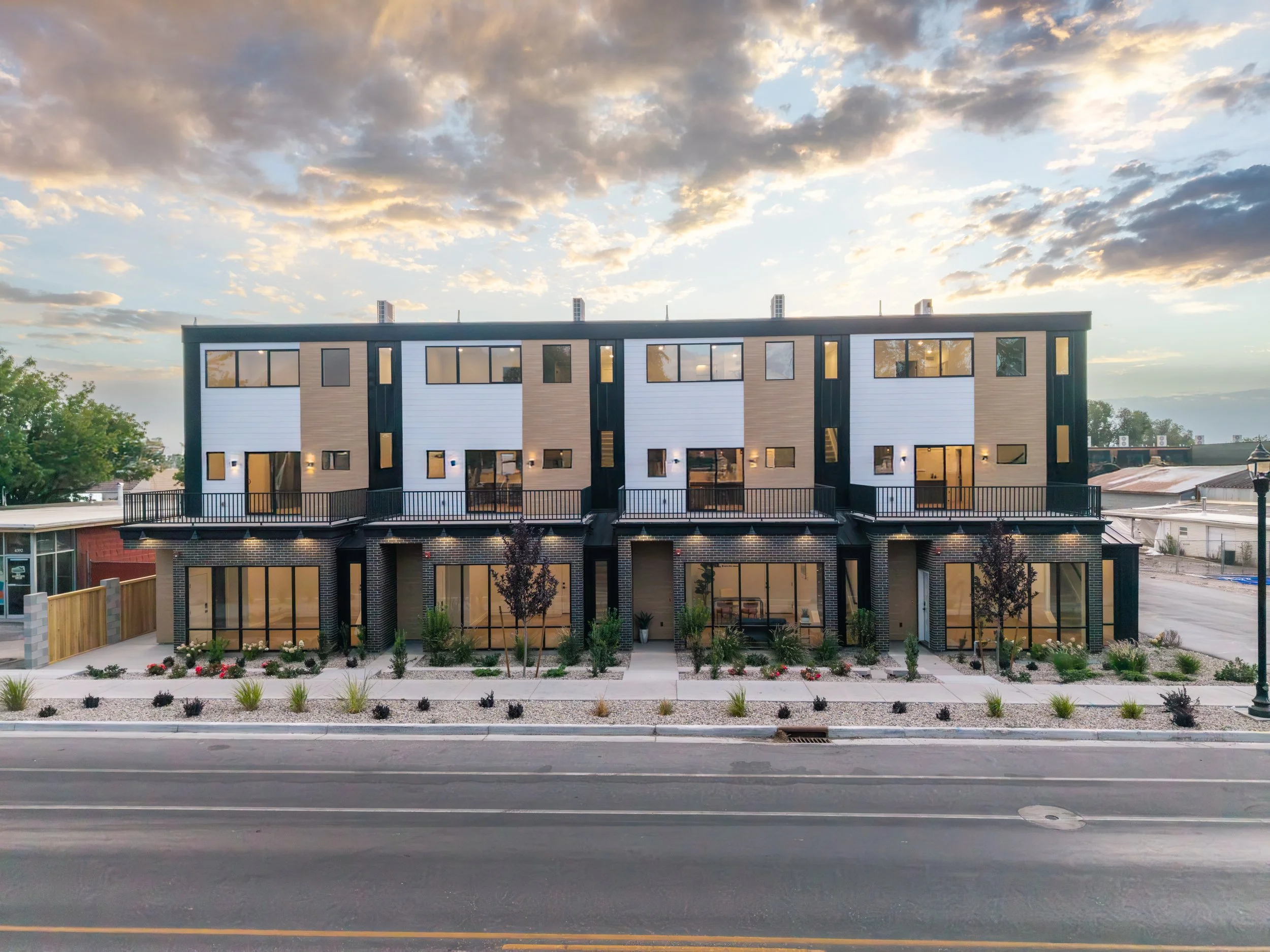
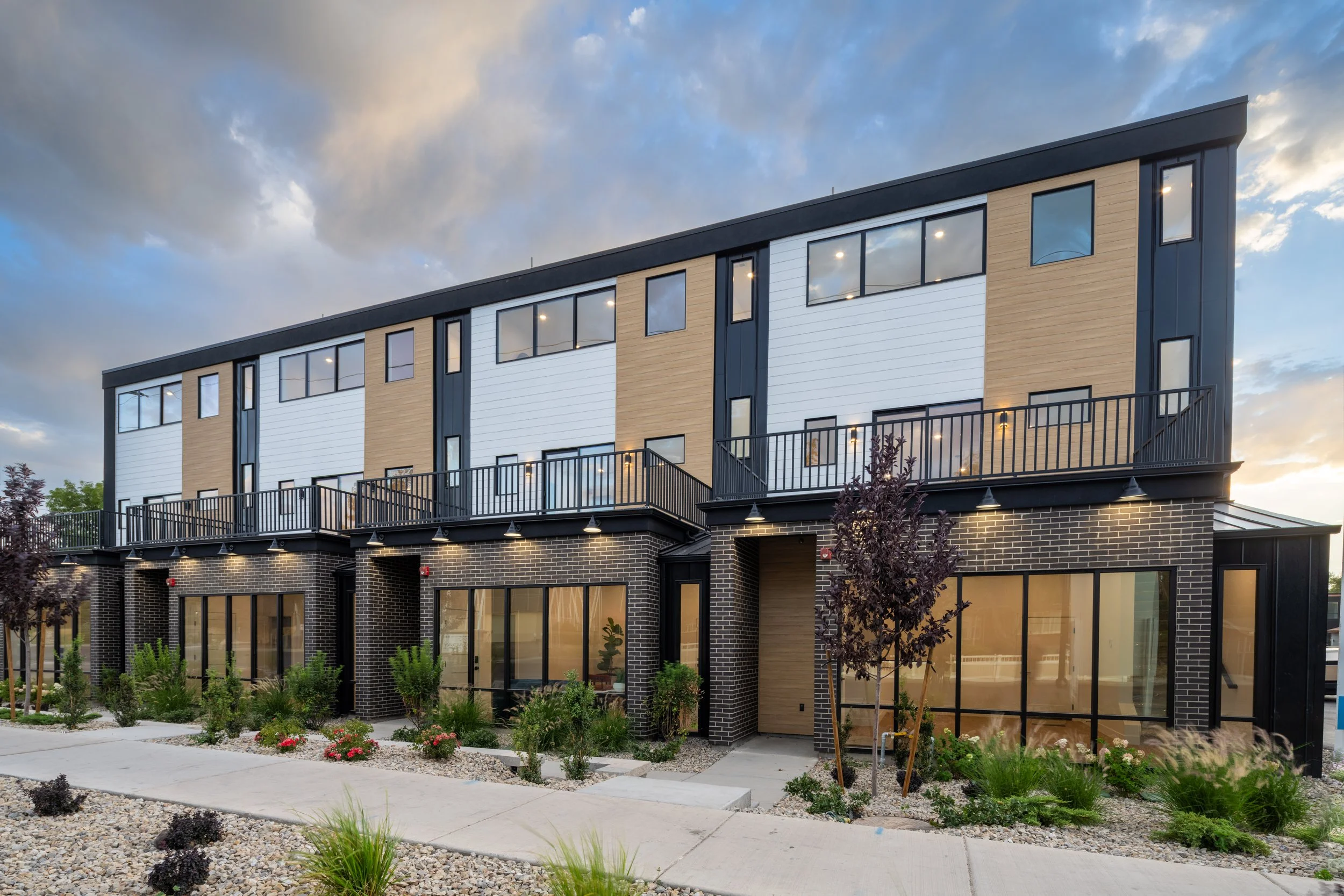
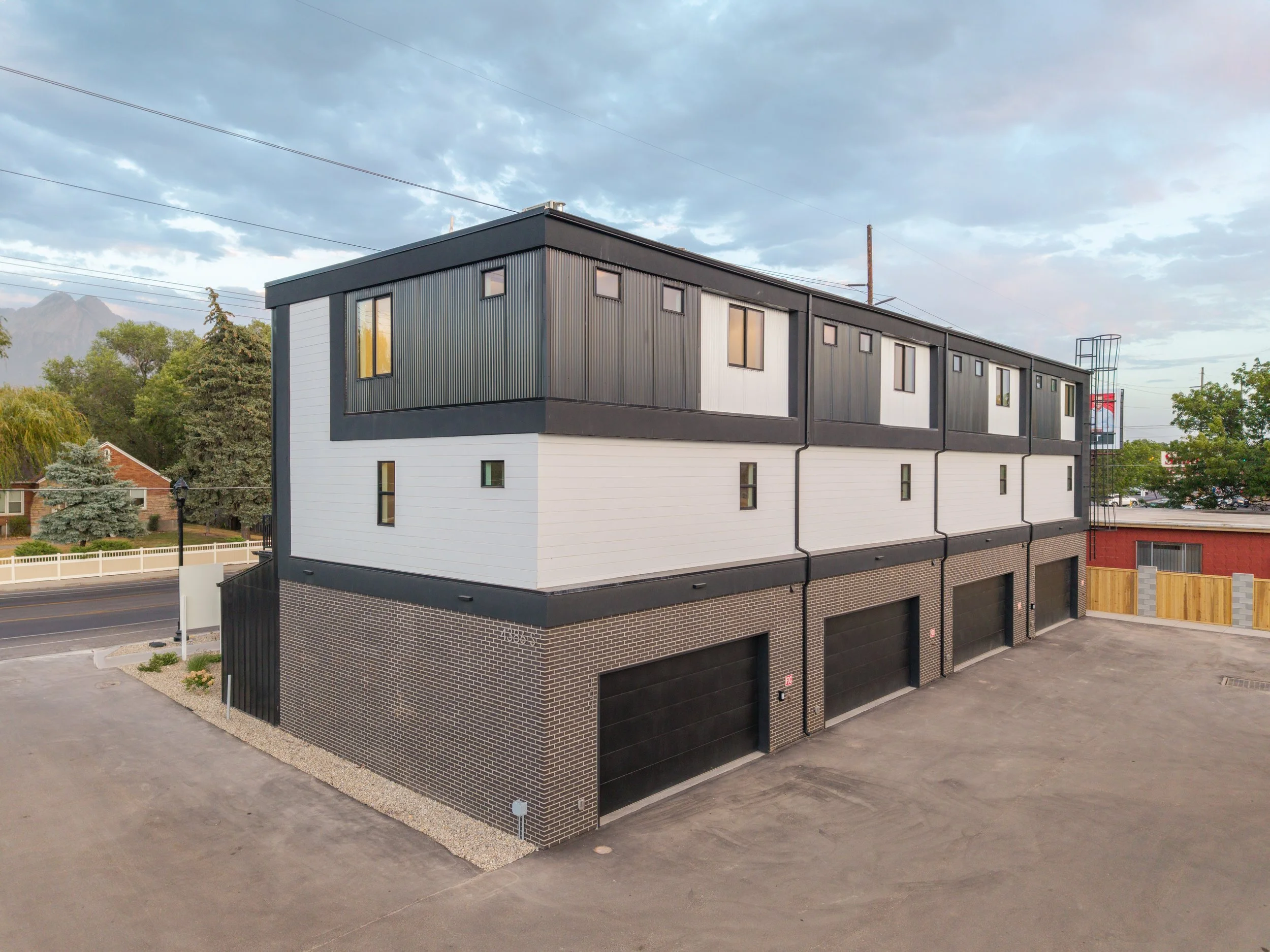
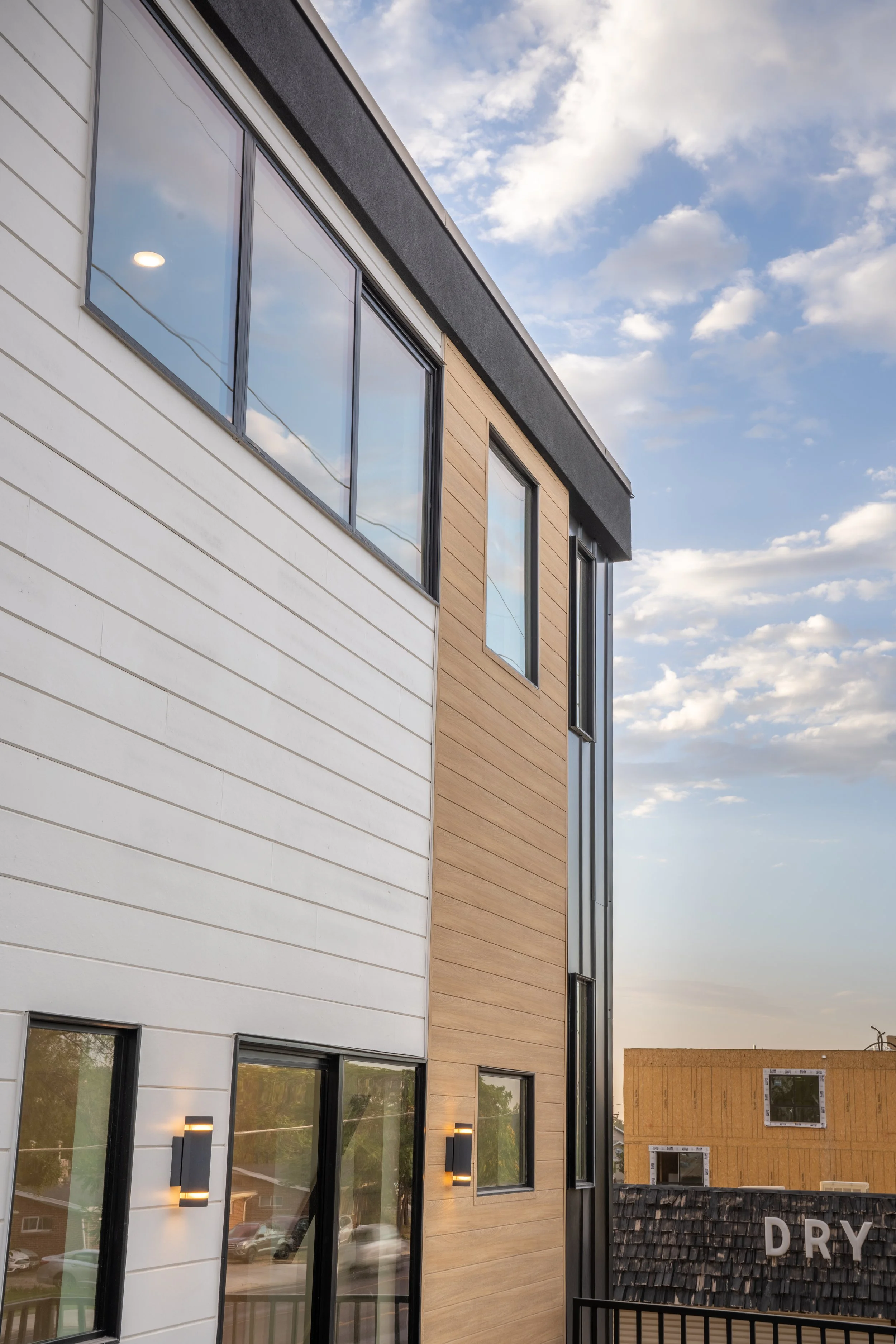
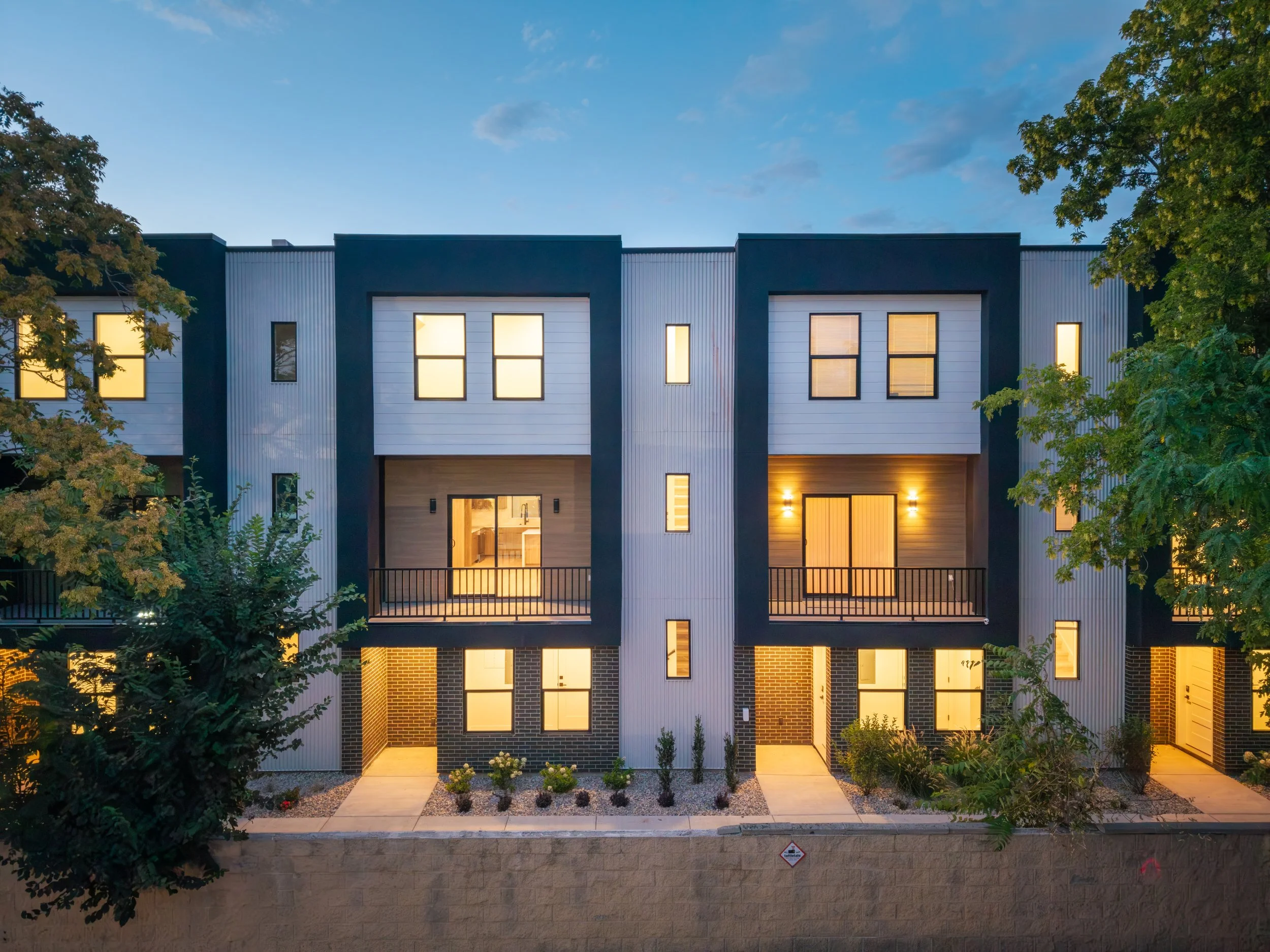
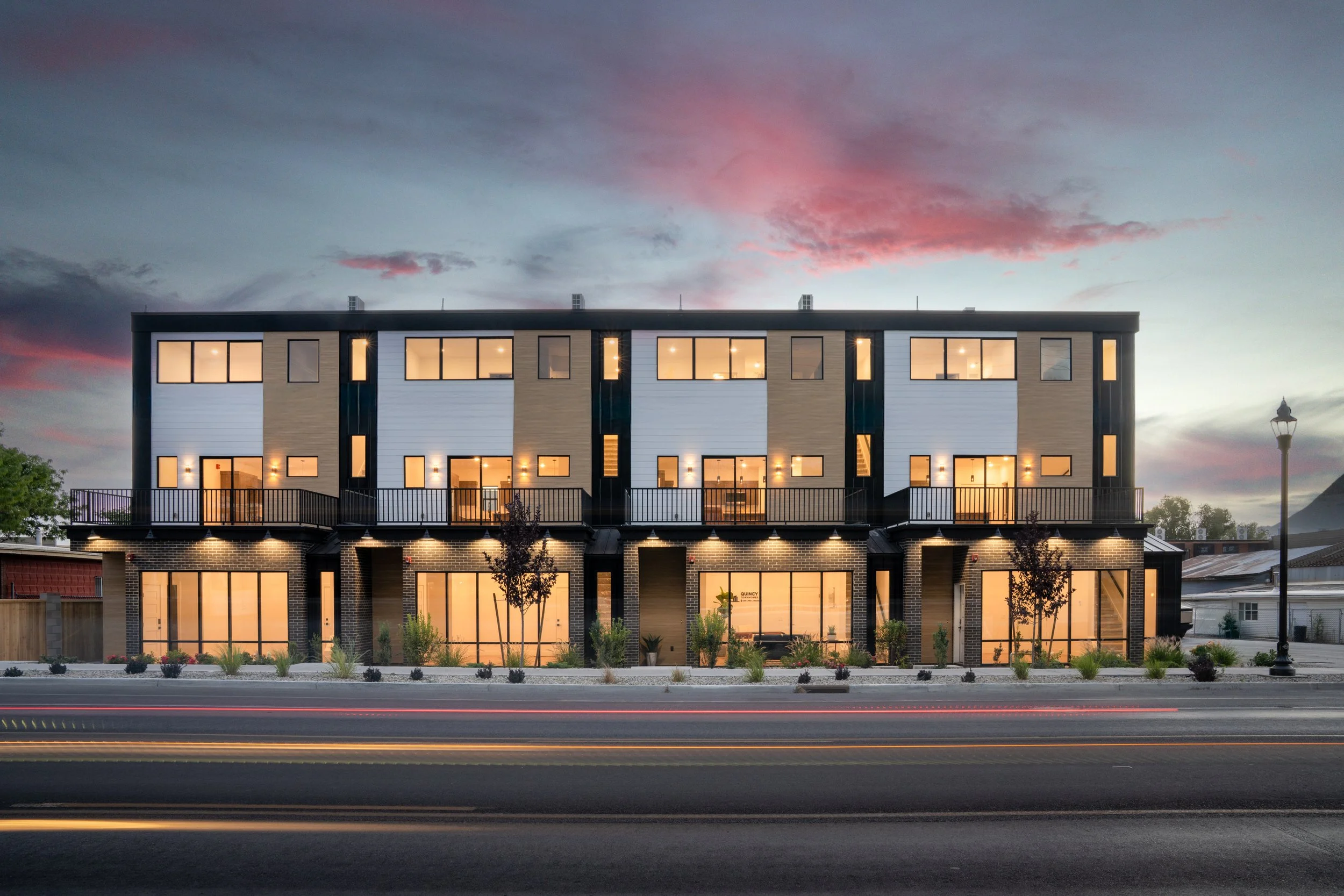
Visually, Quincy Townhomes has a clear, recognizable identity. The building is three stories tall, with a composition that mixes strong vertical rhythm and clean horizontal layers. The ground floor is wrapped in dark brick, giving it a sturdy, timeless base and echoing classic main-street storefronts. Above that, alternating bands of white siding and warm wood-tone panels break the massing into smaller, easy-to-read sections. Black metal trim around the windows and balconies pulls everything together and adds sharp, modern contrast.
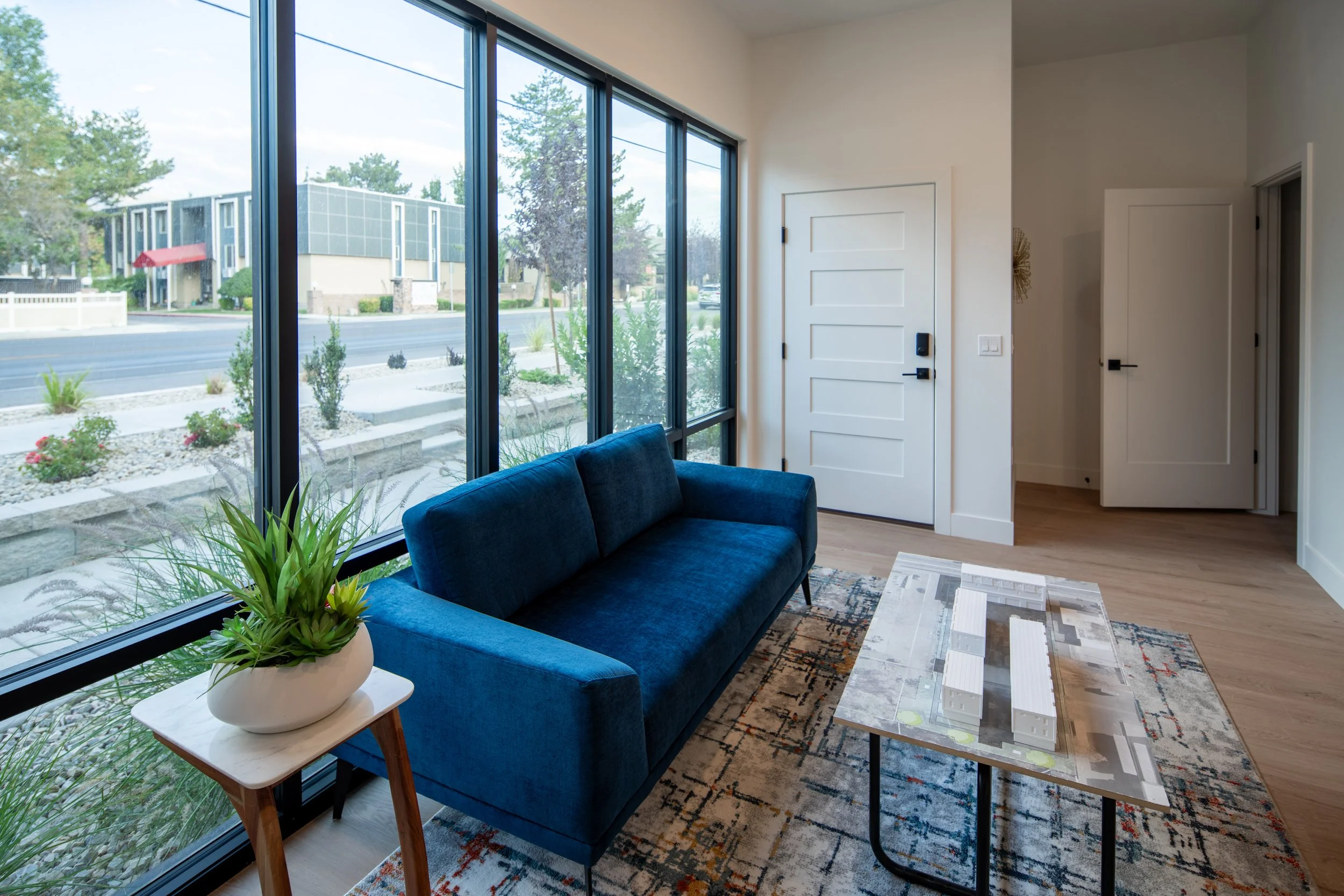
That mix of brick, siding, and metal gives the building depth and texture, while also holding up well in Utah’s shifting seasons. At the street level, large storefront windows make it clear these units are ready for commercial use and help the building feel active and open to the public. Upstairs, the window pattern becomes more measured and rhythmic—letting in plenty of light while still keeping the homes comfortable and private.
Unit Type 1 – Street-Facing Live–Work Units
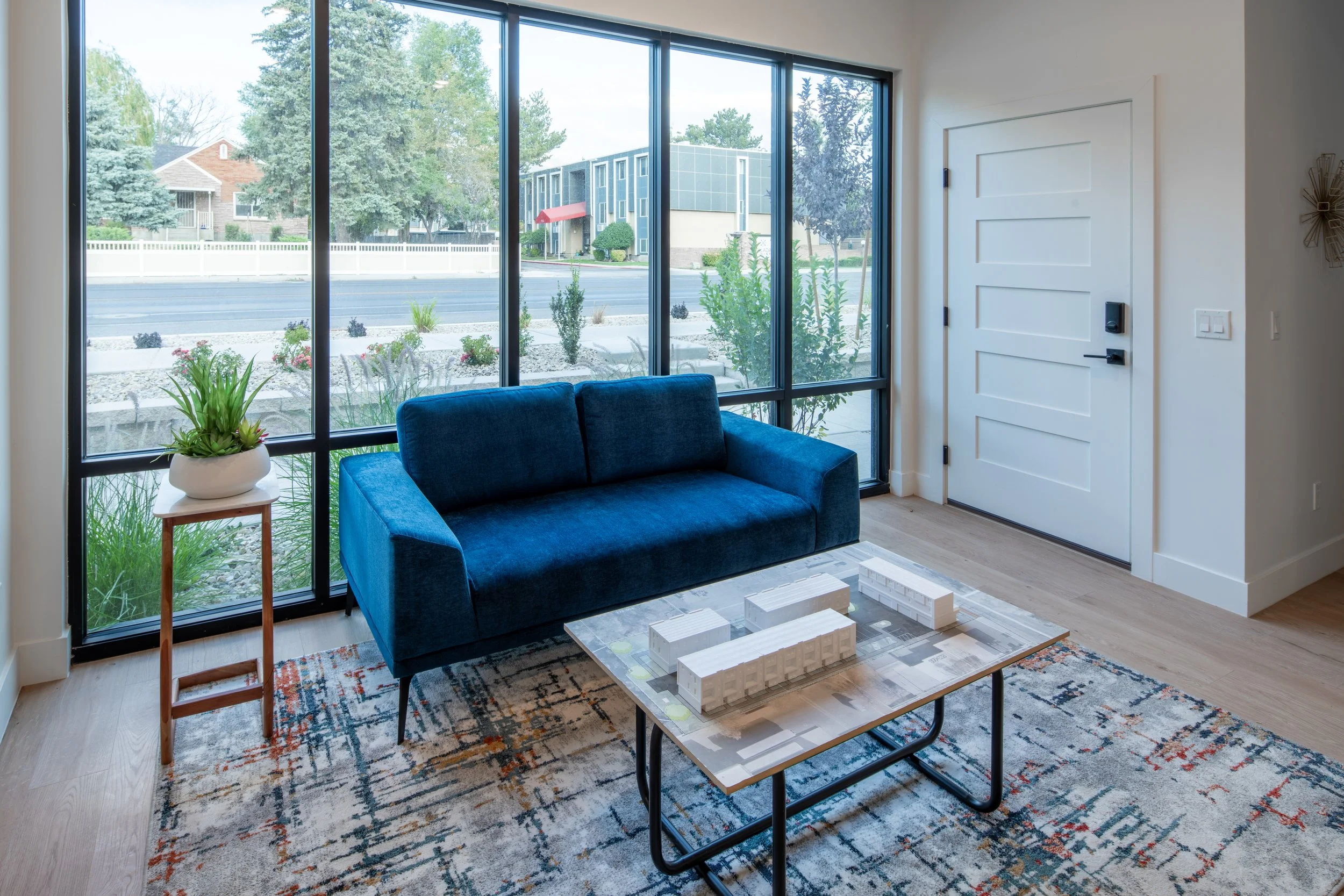
The first unit type was designed to meet the commercial zoning requirements along the 900 East frontage. These units are a live–work unit, with the ground level containing commercial or office space, accessible from the public sidewalk. This level also integrates garage access at the rear, maintaining the practicality of private parking while keeping the front facade active and transparent. This level also has an ADA bathroom, to meet zoning requirements.
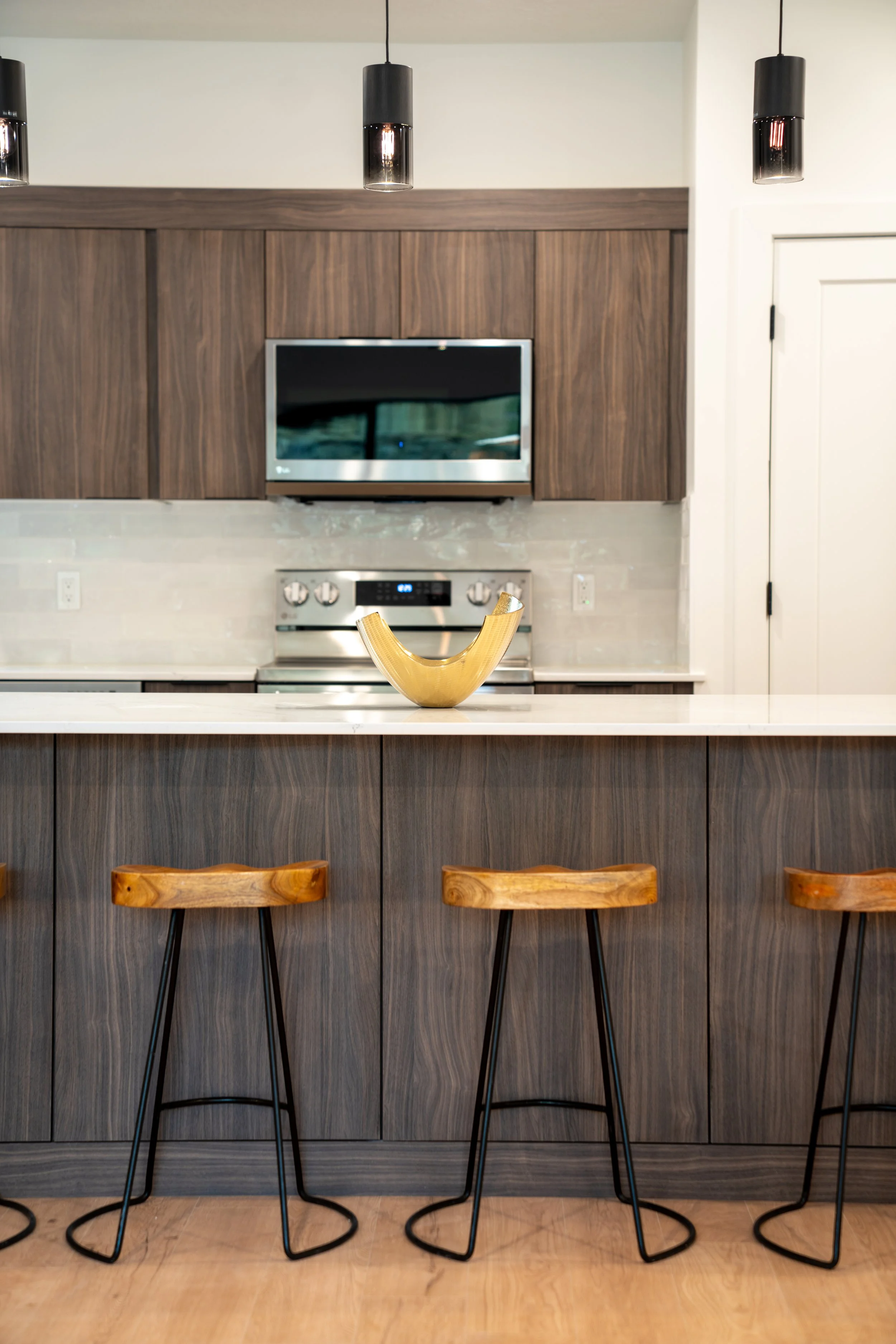
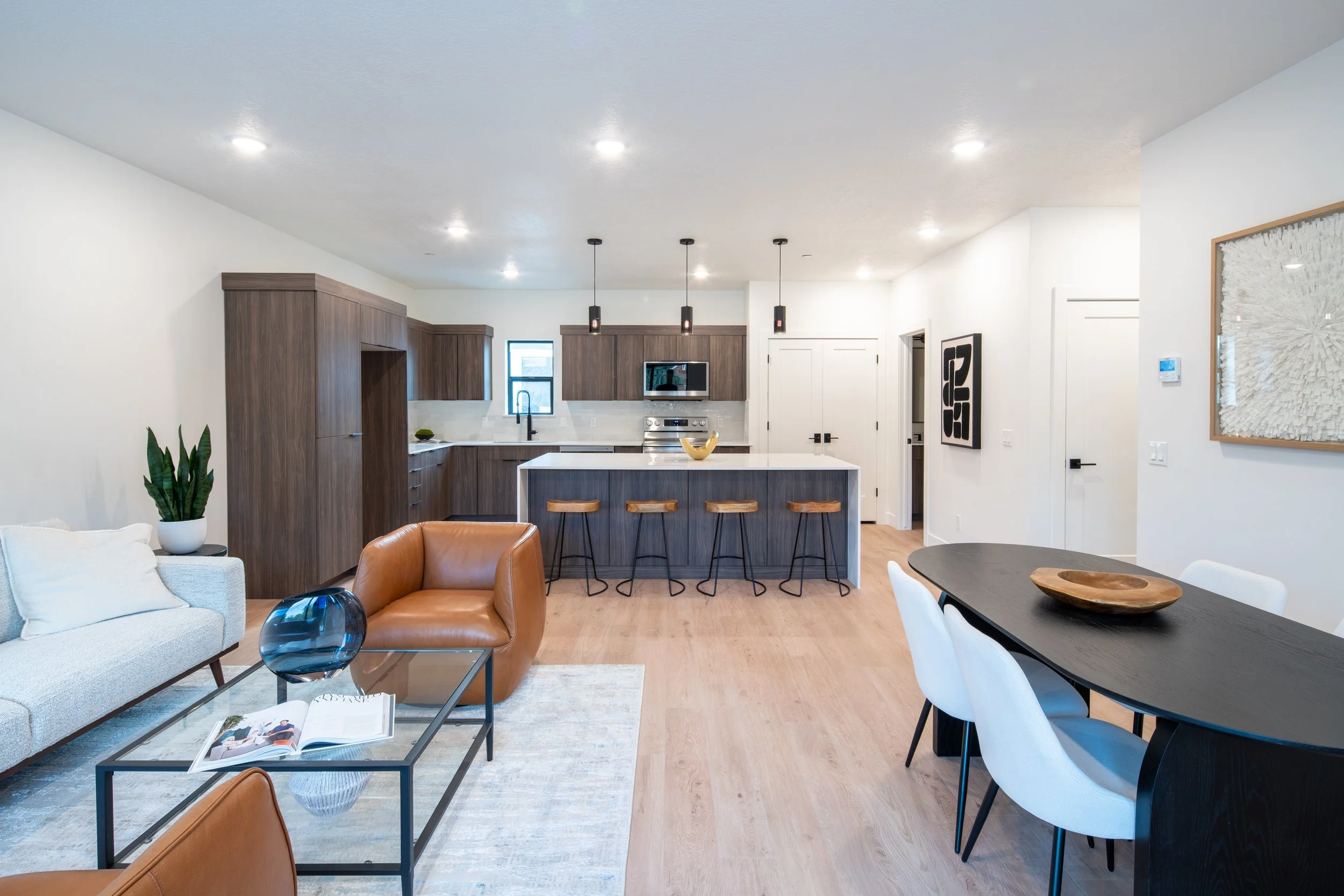
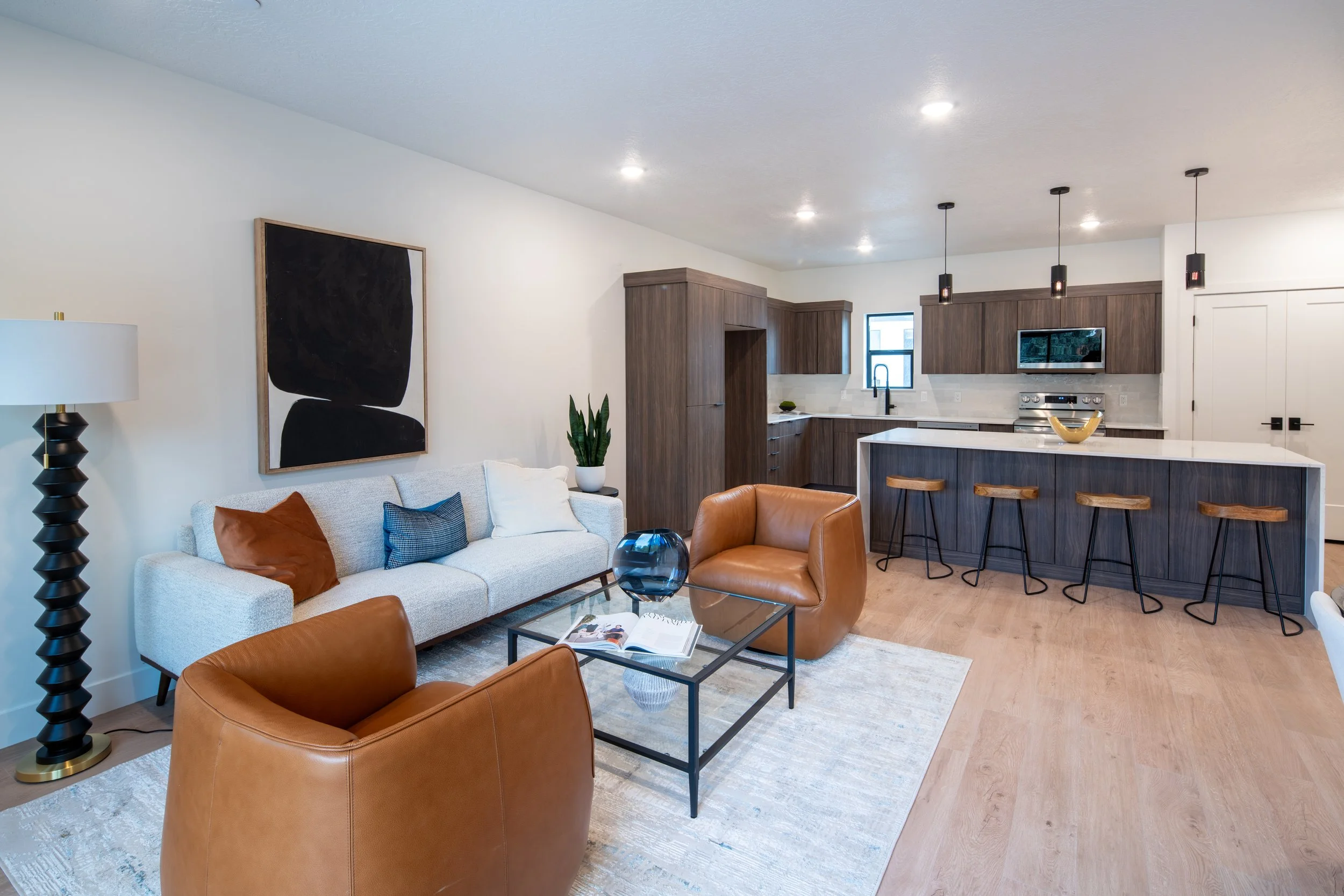
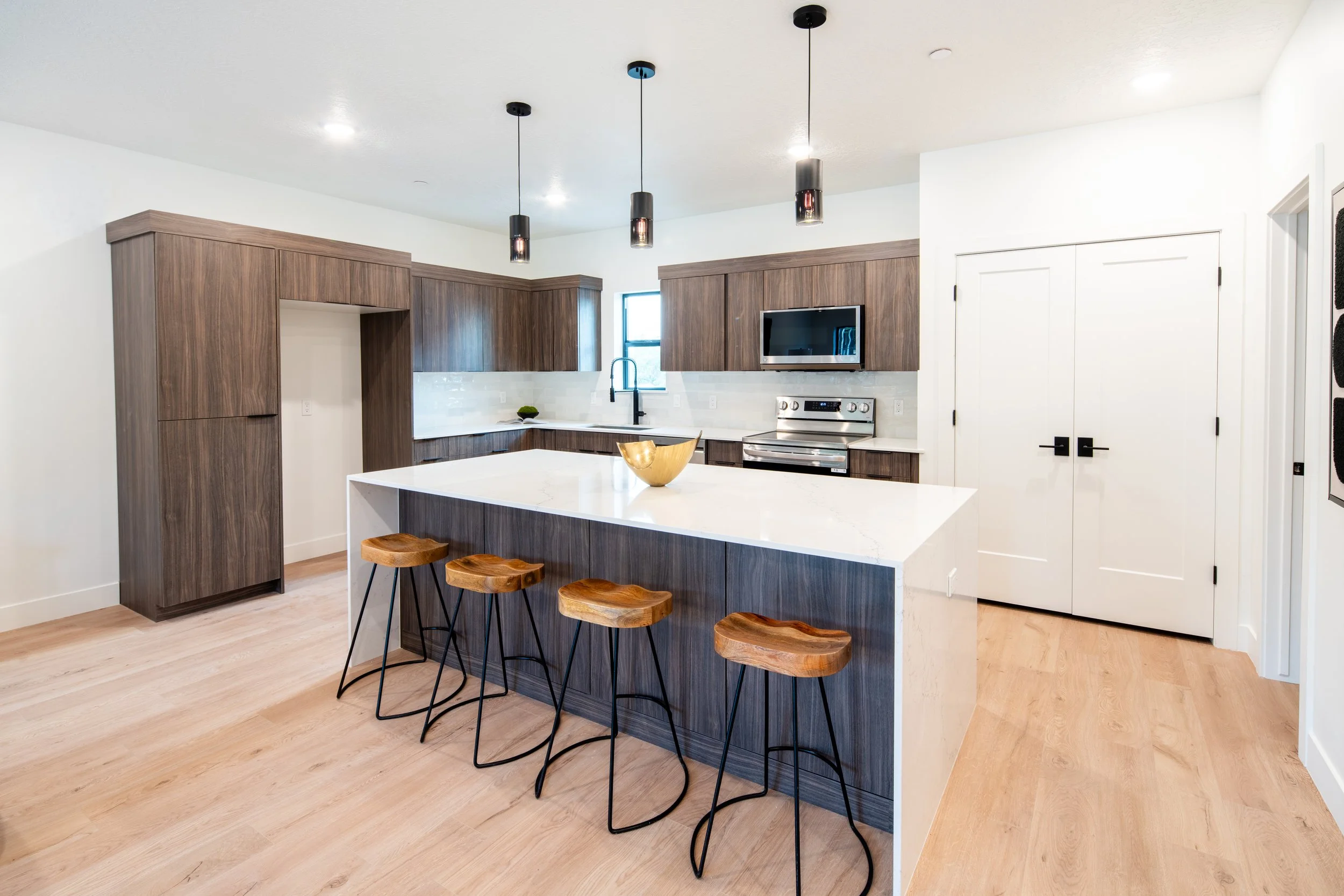
Above, two residential floors unfold: a second-level open-plan kitchen, dining, and living space with a balcony, and a third-level private bedroom suite configuration. This vertical stacking allows residents to operate a small business, studio, or professional office on the ground floor while keeping their domestic life private above—a contemporary iteration of the historic shop-house typology.
This solution was key to meeting Millcreek’s mixed-use requirement, while also producing adaptable, marketable housing.
Unit Type 2 – Interior Residential Units
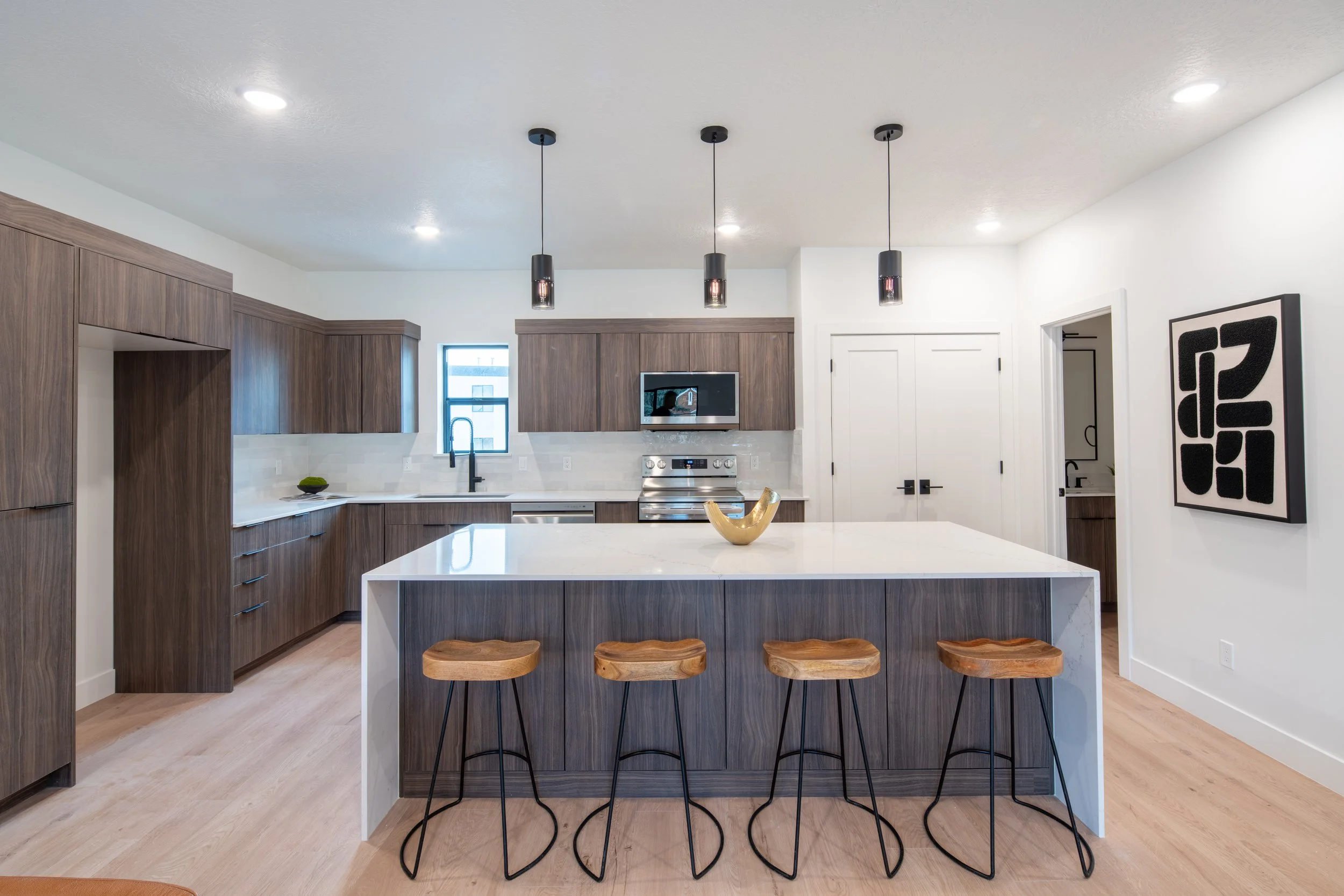
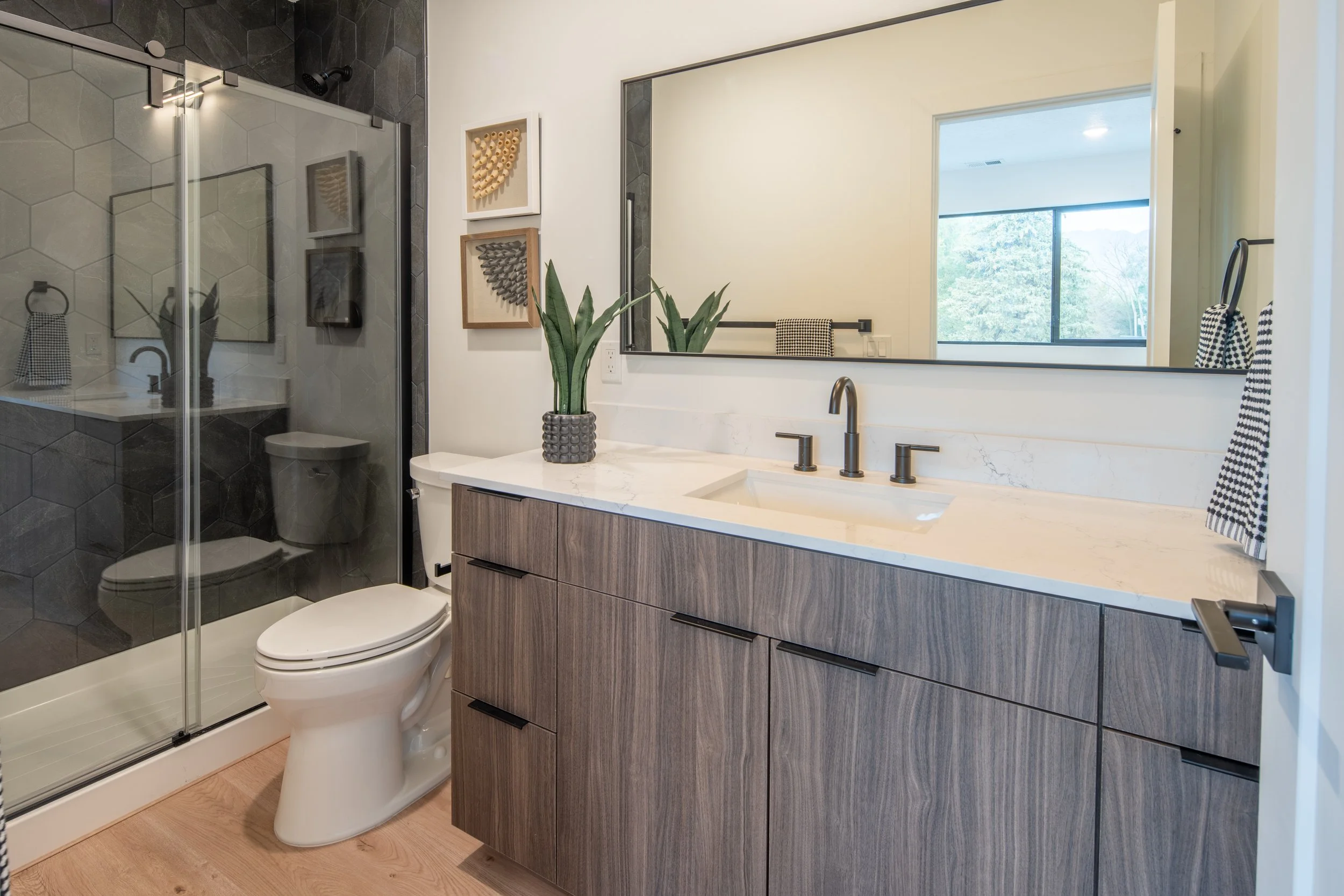
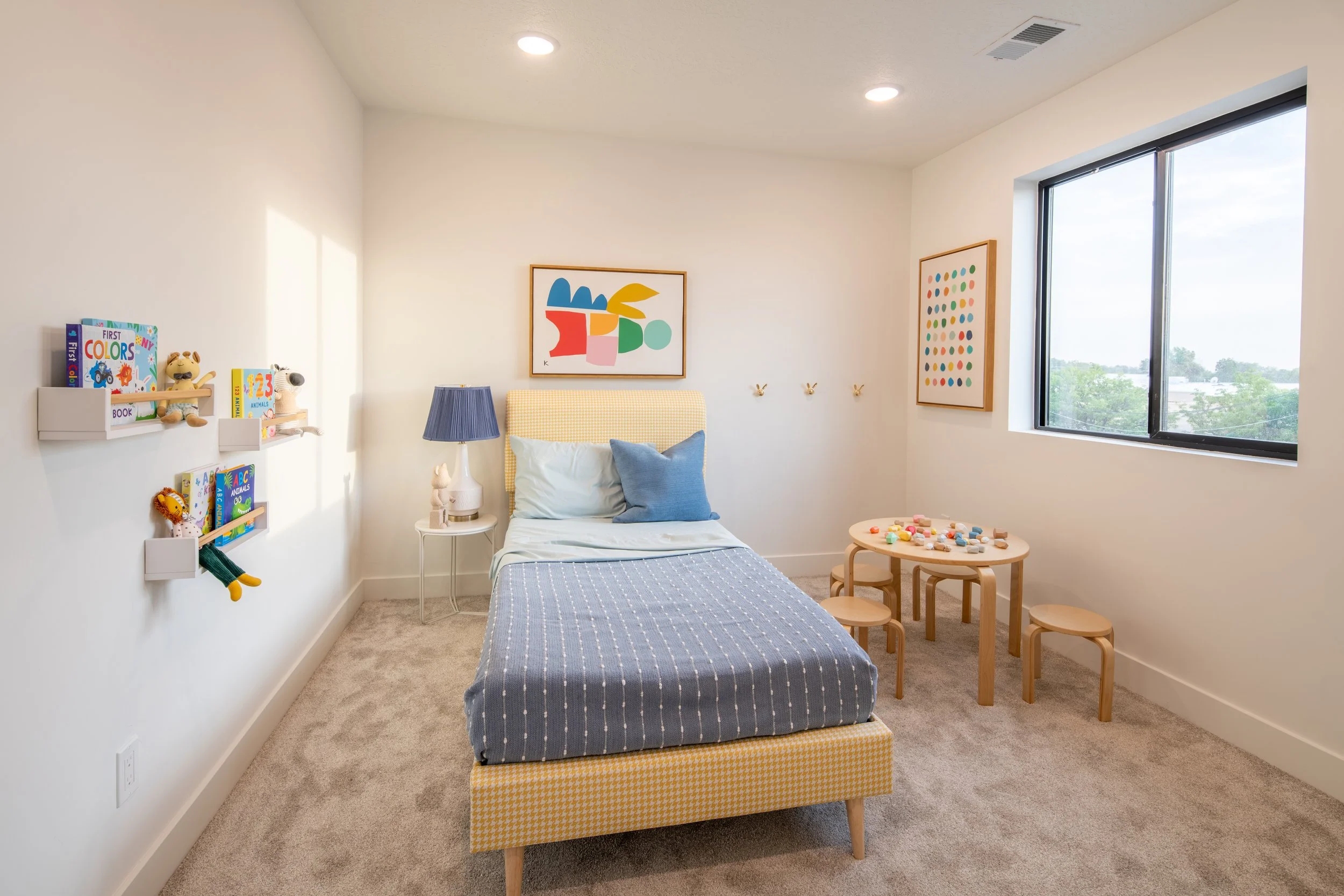
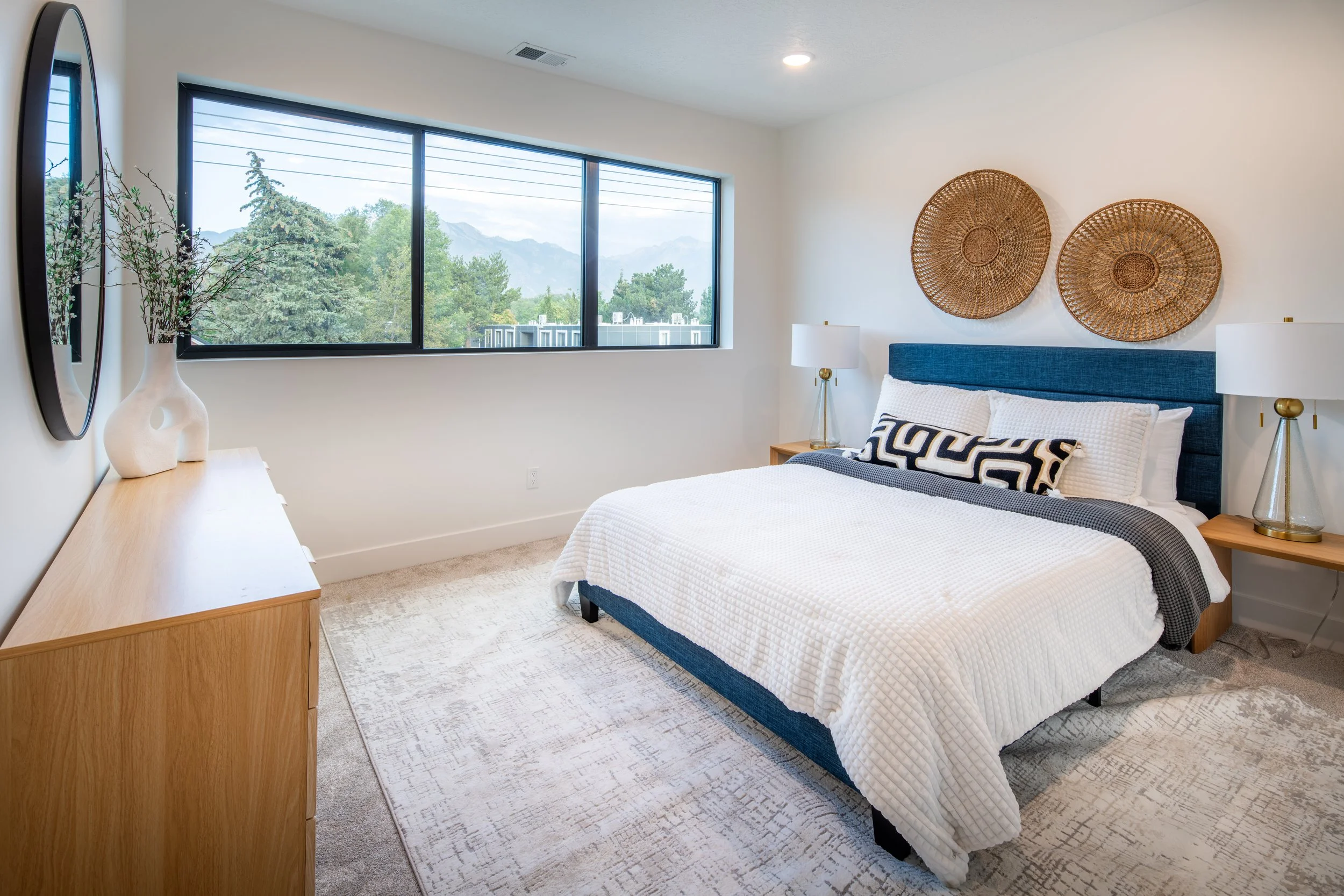
Set back from the street and organized more as private townhomes, The second unit type focuses entirely on residential life. The ground floor contains a garage and entryway, the second floor houses the primary living/dining/kitchen area, and the top floor is reserved for bedrooms, bathrooms, and laundry.
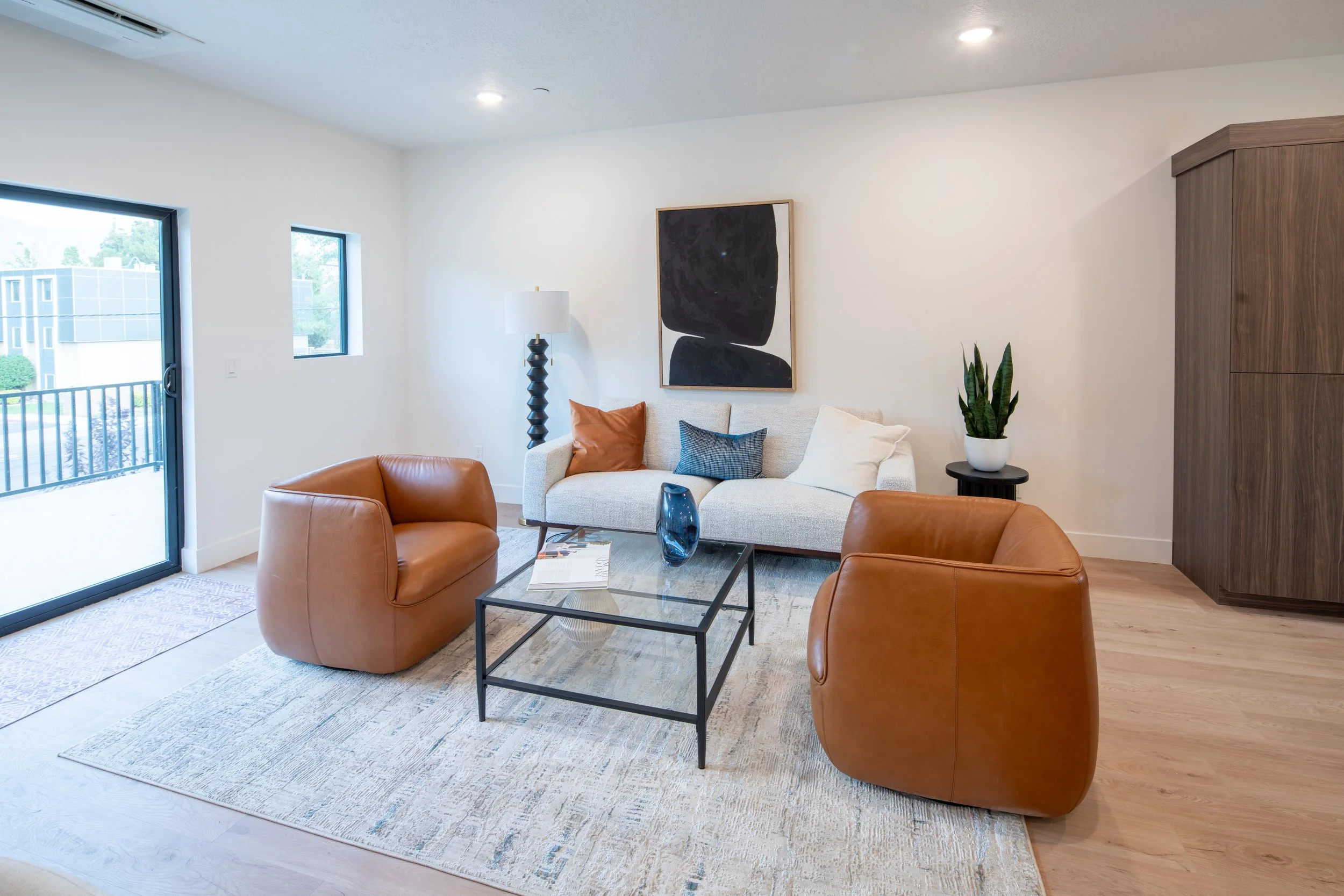
Compared to the street-facing units, these homes offer cozy entries, buffered from public activity. Their design emphasizes domestic comfort and community living, featuring layouts that bring in plenty of natural light, flow efficiently from room to room, and include private outdoor spaces in the form of balconies
Together, the two unit types create a balance between public-facing, mixed-use activity and private, residential enclaves, demonstrating how thoughtful planning can respond simultaneously to zoning mandates and resident needs.
Keeping Sustainability in Mind
While the Quincy Townhomes are not presented as a certified green building project, the construction documents and site plans highlight several sustainability strategies:
Residential Wood Construction: A cost-effective, renewable structural system that minimizes embodied energy compared to steel or concrete mid-rise solutions.
Landscape and Site Grading: Grading plans ensure a 5% slope away from buildings, with landscape buffers that manage stormwater and provide a visual softening between hardscape and building edges.
Parking Efficiency: Each unit is served by a private garage, supplemented by uncovered parking (including ADA spaces). In total, the project exceeds the minimum parking required under zoning, reducing street-parking strain.
Bicycle Parking: Three bike spaces are provided, consistent with zoning requirements, offering sustainable transport alternatives.
Durable Exterior Materials: Brick, fiber cement siding, and metal trim not only deliver aesthetic clarity but also ensure long-term performance under Utah’s climate conditions.
Together, these strategies reflect a pragmatic balance between sustainability, affordability, and durability in a medium-density residential context.
Lessons learned and Architectural Significance
Quincy Townhomes offers several insights relevant to contemporary residential architecture:
Zoning as Design Driver
Millcreek’s requirement for vertically integrated mixed-use development could have resulted in awkward or forced design solutions. Instead, Quincy demonstrates how zoning mandates can inspire innovative typologies such as the live–work townhouse.Balancing Public and Private
By pairing street-facing commercial-ready units with more private interior units, the project delivers both activation of the corridor and resident privacy, an important duality in mixed-use urban housing.Material and Massing Strategies
The facade’s tripartite composition—brick base, alternating siding, and metal trim—balances durability, rhythm, and warmth, breaking down a larger building into legible human-scaled components.Repeatable Model for Growth
The project provides a replicable precedent for medium-density, mixed-use housing in suburban-edge cities. Its combination of live–work adaptability and efficient residential planning offers a model for other communities facing similar zoning and growth challenges.
The Quincy Team
Every successful project is the result of teams of talented people working together in order to make the project a success. The owners and stakeholder groups play a huge role in defining the goals and objectives of the project. It is their vision for what they want to accomplish that really allows us to be successful in our work. Architects and Engineers make up the design team that is responsible for planning out and documenting everything that goes into making a building. Once the project is fully documented it is then in the hands of skilled craftsmen and trade workers who make up the construction team that physically brings the design into existence.
We would like to thank all of those who worked on this project to make our vision a reality by giving credit here with links to their websites.
Stakeholders
Owner | Strength, PC
Design Team
Civil | Wilding Engineering
Structural | York Engineering
MEP | Red Brick Engineering
Landscape | Landform Design Group
Construction Team
General Construction | J-Corp Development
Architecture Project Management
Architecture Team
Managing Principal | Jarod Hall
Project Manager | Stephanie Davis
Support Staff | Ethan Barley, Marin Smith, Tyler Froelich, Rebecca Ruby, Mike Smith, Yanely Perez, Jeremy Larsen, Chris Wheeler
Project Scope
Building Design (SD, DD, CDs) | A full scope of building design services was provided including everything from the initial schematic design concept to developing the design and completing full documentation of the building plans. This phase of work also included navigating a design review process with the city and obtaining the proper jurisdictional approvals for the design.